How to Transport Awkward Loads Without Damage

A boxed sofa that will not fit through a stairwell, a long length of pipe, a fragile display stand or an urgent machine part can turn a simple delivery into a difficult job. Knowing how to transport awkward loads starts with recognising that weight is only one part of the problem. Shape, size, balance, access and how much handling is needed all affect the journey.
An awkward item does not have to be exceptionally heavy to need careful planning. A lightweight but oversized item can restrict the driver’s view or move around in transit. A long, narrow item may overhang or be difficult to secure. Furniture can be bulky and easily marked, while valuable equipment may have vulnerable corners, screens or fittings.
The safest approach is to plan the load before collection, select a suitable vehicle and reduce unnecessary handling. That protects the item, the people moving it and the schedule you are working to.
Start by assessing the load and the route
Before booking transport, take accurate measurements. Measure the item’s length, width and height, then consider its weight if it is known. Include packaging, pallets, protective covers and any removable parts that will travel with it. Photos are useful too, particularly where an item has an unusual shape or needs extra care.
It is equally important to assess collection and delivery access. Check for narrow doors, sharp turns, low ceilings, stairs, lifts, gates and restricted parking. A cabinet may fit inside a van but still be impossible to move safely through a narrow hallway. Similarly, exhibition equipment may be straightforward to load from a ground-floor unit but require planning at a city-centre venue with timed access.
For businesses, confirm whether the collection point has a loading bay, forklift or staff available to help prepare the consignment. For private customers, explain where the item is located and whether there are steps at either address. Clear information at the outset helps us select the right vehicle and plan the collection properly.
Choose a vehicle that suits the item, not just the mileage
A vehicle should provide enough internal space for the load to travel securely, rather than simply being the smallest option that might accommodate it. Trying to squeeze a bulky or irregular item into a vehicle can make loading harder and leave little room to protect or restrain it.
Small vans can be suitable for compact but urgent consignments, such as boxed parts, documents, laptops or smaller items of equipment. Medium and extra-long-wheelbase vans give more usable length for materials, stock and awkward loads. For furniture, white goods, palletised items, office equipment or a small move, a Luton van may provide the space needed for a safer, more organised load.
The right choice depends on the item and the route. A narrow but lengthy load may need vehicle length more than height. A tall item needs sufficient headroom and a stable way to secure it. Several smaller items may need space between them so they do not rub, topple or put pressure on fragile surfaces.
Protect the item before it goes into the vehicle
Good protection is not just for delicate goods. Furniture can be scratched by moving hardware. Metal components can mark finished surfaces. Cardboard packaging may be strong enough for storage but not for a journey where it can slide against other items.
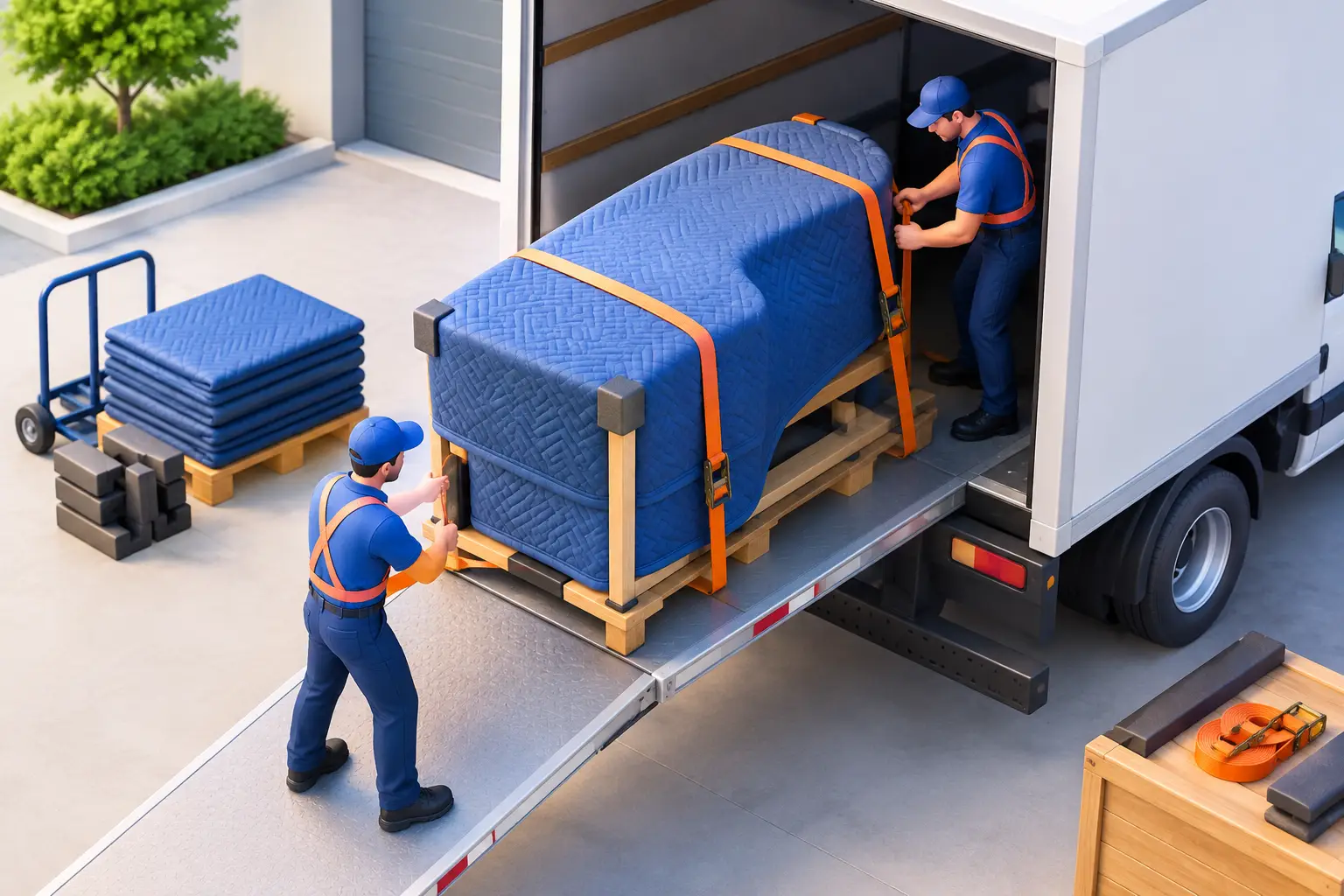
Where appropriate, use covers, corner protection, wrapping and padding to separate the item from vehicle sides and other consignments. Remove or secure loose shelves, drawers, cables and detachable fittings. If an item has a glass panel, screen or polished finish, make this clear when arranging transport so it can be positioned with care.
Do not rely on a blanket alone to stop an item moving. Protective materials reduce scuffs and knocks, but restraint is what keeps the load stable. The item should be secured in a way that prevents forward, sideways and backward movement during braking, cornering and normal road conditions.
Secure awkward loads for the whole journey
An item can seem stable when the vehicle is stationary and still shift once it is on the road. This is particularly true of tall furniture, unevenly shaped equipment, rolls of material and items with a high centre of gravity.
Load heavier items low down and as evenly as possible. Keep the centre of gravity low, and avoid placing unstable goods on top of other items. Where there are several pieces, distribute their weight sensibly rather than concentrating it on one side of the vehicle.
Use suitable securing points and restraints for the load. A long item may need more than one restraint point to stop it flexing or sliding. Pallets, cases and boxed stock may need to be held against a solid surface so they cannot move into open space. The arrangement should be checked before departure, especially after loading a mixed consignment.
It is also worth thinking about unloading. The last item loaded is often the first item needed at the destination. Planning the load order can reduce handling and avoid having to move other goods unnecessarily to reach one essential item.
Reduce handling when timing and condition matter
Every transfer creates another opportunity for an item to be knocked, misplaced or delayed. This matters when you are sending a replacement automotive part to keep a repair moving, taking production equipment to a venue or transporting a customer’s furniture between homes.
A dedicated vehicle can be the practical choice for awkward loads because the consignment travels directly from collection to destination. It is not routed through parcel sorting depots or passed between multiple vehicles. That reduces handling and gives the driver a clearer understanding of what is being carried and where it needs to go.
This approach is especially useful for urgent business deliveries. If a factory needs a component, a construction team is waiting for materials or a colleague has left an essential laptop at the wrong location, direct transport keeps the arrangement focused on that one consignment. For private customers, it can make marketplace collections, sofa deliveries and white goods transport much more straightforward.
When you should use a professional courier
Some items are manageable in your own vehicle, provided they fit safely, can be restrained properly and do not affect visibility or vehicle handling. But there is a point where hiring a suitable van and arranging a dedicated courier saves time and reduces risk.
Consider professional transport when the load is too large for your vehicle, difficult to lift, valuable, fragile, time-sensitive or awkward to secure. It is also sensible when collection and delivery locations involve stairs, limited access or a long-distance journey. A dedicated courier can match the vehicle to the job and collect at an agreed time, so you do not have to make several trips or leave an important item waiting.
For regular business requirements, clear booking details make repeat deliveries easier to organise. Share the usual collection points, delivery instructions, item types and any access restrictions. If you send similar consignments often, a business courier account may also help to keep booking and billing centralised, subject to approval.
Information to provide when requesting a quote
The more accurate the information, the more suitable the transport plan will be. Include the collection and delivery postcodes, preferred dates, item dimensions, approximate weight where known, and whether help may be needed because of stairs or restricted access.
Explain what the item is made of and whether it is particularly fragile. Mention if it must travel upright, cannot be stacked or has loose components. For urgent jobs, state the deadline clearly. For larger loads, photos can quickly show the shape, packaging and likely vehicle requirement.
DB Couriers provides dedicated same-day, next-day and scheduled transport from Liverpool and across the UK. We can arrange a vehicle suited to items ranging from urgent documents and equipment to pallets, furniture and exhibition materials, with direct delivery from collection to destination.
Awkward loads are rarely difficult because of one single issue. They become difficult when dimensions, access, protection and timing are overlooked. Give the journey the same thought as the item itself, and arrange a collection with a vehicle that gives it the room, support and care it needs. Request a free quote to discuss your load and delivery requirements.


Comments