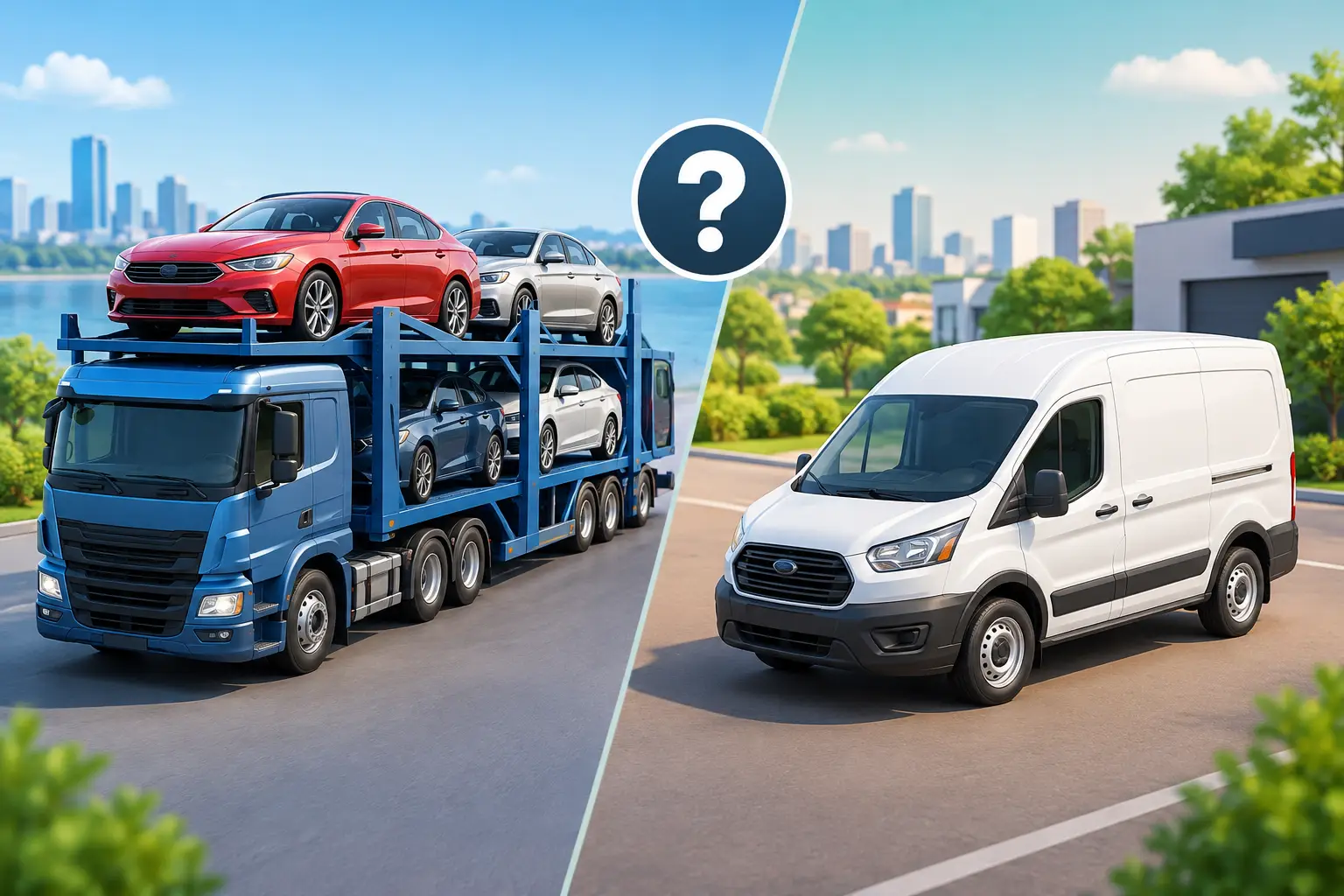
Car Courier Versus Small Van: Which Fits?

A car courier versus small van decision often comes down to one practical question: what needs to arrive, and how much room does it really need? Sending a signed contract, spare vehicle key or forgotten laptop is very different from moving boxed stock, exhibition equipment or a washing machine. Choosing the right vehicle helps keep the job straightforward, protects the item in transit and avoids paying for capacity you do not need.
For urgent or planned deliveries, the vehicle should suit both the consignment and the journey. A dedicated courier service means your items travel directly from collection to destination, rather than through sorting depots or between several vehicles. The right choice then depends on size, weight, access, timing and how the load needs to be handled.
When a car courier is the right choice
A car courier is well suited to small, urgent and important consignments. This includes documents for a legal appointment, a laptop left at home before a meeting, replacement automotive parts, keys, passports, samples or compact production equipment. These items may be small, but the consequences of a delay can be significant.
Cars are particularly useful where collection or delivery access is tight. City centres, office car parks, residential streets and busy sites can make a larger vehicle less convenient. If the item can be safely secured in a car and does not require the loading space of a van, a car courier can be an efficient option.
It is also a sensible choice when the journey is time-critical but the consignment is light. A direct collection and delivery removes unnecessary handling, which is valuable for confidential paperwork, delicate items and belongings you need returned quickly. For example, if a member of your team has left a laptop in Liverpool and needs it for a presentation in Manchester, the priority is getting that one item to the right person without delay or extra transfers.
A car is not simply a smaller version of a van. Its limits matter. Larger cartons, awkwardly shaped goods, multiple items or anything that needs to remain upright may call for more space. Trying to fit a load into the wrong vehicle can make collection slower and increase the risk of poor loading.
Car courier versus small van: the key differences
The main difference is carrying capacity, but that is not the whole picture. A small van gives you more usable loading room and a flatter, more flexible space for boxes, stock and equipment. A car offers a practical solution for compact consignments where access and urgency are the main concerns.
Weight is just as relevant as dimensions. A small item can still be heavy, while a large but lightweight item may need volume rather than payload capacity. When requesting a quote, give clear details of the item, including approximate dimensions, weight, quantity and whether it is boxed, loose, fragile or difficult to carry. A photograph can also help where an item has an unusual shape.
Think about the collection and delivery points too. A ground-floor office collection with nearby parking is different from collecting several boxes from a warehouse, or delivering furniture to a flat with limited access. The courier needs to arrive in a vehicle that can carry the goods safely and work sensibly at both ends of the journey.
When a small van makes more sense
A small van is usually the better choice for loads that are too bulky, numerous or awkward for a car. It can be ideal for several boxes of business stock, tools and materials for a contractor, retail collections, event supplies, flat-pack furniture, white goods and small office equipment.
For businesses, this extra space can prevent a simple delivery becoming two separate journeys. A manufacturer may need several replacement parts sent to a customer site. A retailer may need stock collected from a supplier. A construction team may be waiting for equipment or materials before work can continue. If the load fills a boot or needs stacking carefully, a small van gives the driver the room to secure it properly.
Private customers often find a small van useful for marketplace purchases, sofa collections, appliances or a few larger belongings during a small house move. It is not necessary to arrange a large removal vehicle for every job. Equally, a car may not be appropriate for furniture or white goods, even if the journey itself is short.
The vehicle is also useful where an item needs to travel upright or be protected from other loose goods. A boxed monitor, display stand, set of chairs or production case may need more than just enough physical room. It needs a stable loading position for the full journey.
Do not choose on size alone
It can be tempting to judge by whether an item looks as though it will fit. A better question is whether it can be loaded, secured and unloaded safely. A bulky item may fit into a small van but still require careful planning around access, lifting and the route to the door.
Consider whether there are stairs, narrow hallways, loading bays, timed site access or a person available to receive the item. These details allow the journey to be planned properly and help avoid surprises when the vehicle arrives. For an office relocation or furniture delivery, accurate information is more useful than a rough description such as “a few bits”.
How urgency affects the choice
Urgent delivery does not automatically mean a car is best. It means the right vehicle needs to be assigned promptly. If an engineering business needs a critical part delivered the same day, a small van may be essential despite the urgency. If a solicitor needs one signed document collected and taken directly to another office, a car may be the more suitable option.
The benefit of dedicated transport is the same in both cases. Your consignment is collected and taken directly to its destination in the allocated vehicle. There is no depot route and no unnecessary transfer between vehicles. That gives you a clearer route from collection to delivery and reduces handling along the way.
For scheduled work, the same principle applies. A regular delivery of samples, documents or compact parts may suit a car. Repeat stock movements, tools or boxed products may be better handled in a small van. Customers with ongoing requirements can discuss a business courier account with DB Couriers, subject to approval, to make repeat booking and centralised billing easier.
Questions to answer before booking
A clear brief helps match your job to the right vehicle first time. You do not need formal logistics measurements, but a few practical details make a real difference:
What are the length, width, height and approximate weight of each item?
How many items are being moved, and are they boxed or loose?
Is anything fragile, valuable, awkwardly shaped or required to stay upright?
Are there access restrictions, stairs, loading bays or limited parking?
When does it need collecting, and when must it reach the destination?
If you are unsure whether a car or small van is suitable, it is better to explain the job fully than make assumptions. A tailored quote can then reflect the vehicle, route and handling required, rather than offering a one-size-fits-all answer.
A practical way to make the decision
Choose a car courier when the item is compact, can be safely carried in a car and needs a direct journey with minimal handling. This is often the right fit for documents, laptops, keys, small parts and personal belongings that need to reach someone quickly.
Choose a small van when the load involves multiple boxes, larger equipment, furniture, white goods, stock or materials. The additional space supports safer loading and gives you more flexibility when the item is bulky or the collection involves several pieces.
There will be jobs in the middle. A few cartons might fit in a car, but a small van could be more practical if they are heavy or need to remain secure. One item might be physically small but require careful transport. In those cases, the best decision is based on the full job, not just the item’s footprint.
Whether you are arranging an urgent business consignment, a retail collection or a furniture delivery, start with the load and the access at each end. Request a free quote with those details, and we can help you arrange a direct delivery in a vehicle suited to the journey.


Comments