Collection and Delivery Access Your Courier Needs

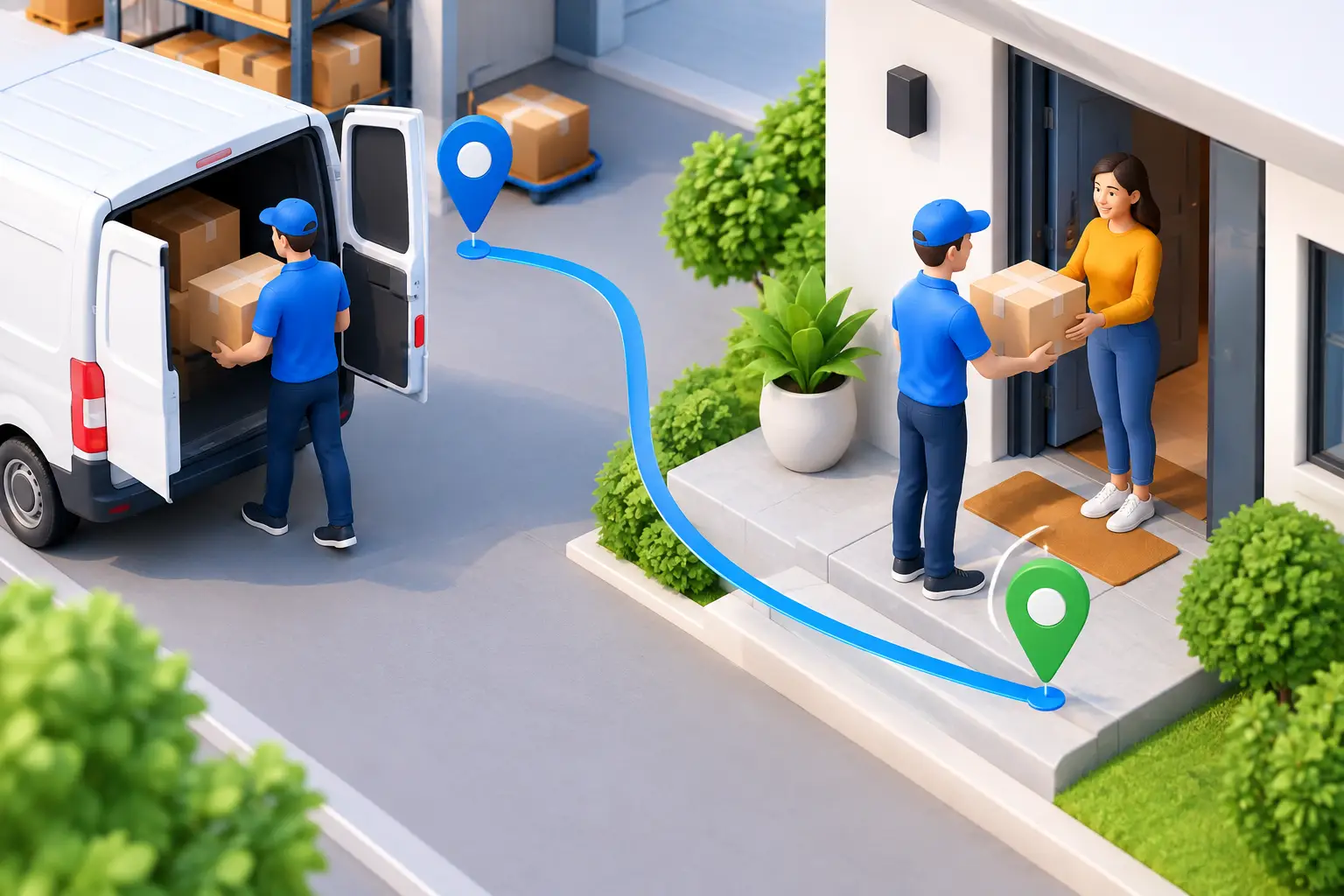
A delivery can be ready to go and still lose valuable time at the gate, loading bay or reception desk. Collection and delivery access: what your courier needs to know is often the difference between a straightforward job and a delayed handover. A few clear details before booking help us choose the right vehicle, plan the approach and collect or deliver your items with less disruption.
This matters whether you are sending an urgent automotive part from a workshop, moving exhibition equipment into a venue, or arranging a sofa collection from a top-floor flat. Access is not just about having an address. It is about how the driver reaches the item, where they can stop safely and who can authorise the handover.
Why collection and delivery access matters
A postcode gets a courier close to the destination. It does not explain whether there is a narrow estate entrance, a controlled loading bay, a height restriction or a long walk from the nearest legal parking space. For time-sensitive consignments, these details need to be considered before the vehicle sets off.
The right access information also affects vehicle choice. A car may suit urgent documents or a forgotten laptop, while a Luton van may be more suitable for furniture, stock or bulky equipment. However, a larger vehicle is not necessarily the right answer if the collection point has low overhead clearance, restricted turning space or a narrow service road. We will discuss the load and access arrangements with you, then select a suitable vehicle for the journey.
For businesses, sharing access information helps keep collections aligned with site procedures. Warehouses, factories, construction sites and event venues may have designated entry points, booking systems or safety rules. Giving the driver the right details in advance avoids unnecessary calls when your team is busy.
Information your courier needs before collection
Start with the full collection address, including the business name, unit number and any entrance that differs from the main postcode. If the site is large, tell us where the driver should report, such as goods in, a security gate, reception or a specific loading bay.
A named contact is equally useful. They should know that a courier is attending and be able to answer their phone around the planned collection time. This is particularly helpful at shared offices, industrial estates, retail parks and private addresses where the item may not be visible from the entrance.
You should also explain the item itself clearly. Accurate dimensions, weight and quantity allow us to send a vehicle with enough space. Tell us if an item is long, awkwardly shaped, on a pallet, boxed, loose, fragile or particularly heavy. A collection involving several boxes of documents needs different preparation from a collection of construction materials, office furniture or production equipment.
Access to the item matters as much as its size. Let us know whether it is on the ground floor, upstairs, in a basement, behind a counter or stored in a warehouse aisle. If there are steps, a lift, a narrow corridor or a long internal distance to cover, please mention this when requesting your quote. This gives us a clearer picture of the work involved and helps avoid surprises on arrival.
Parking, permits and loading arrangements
Legal and practical parking is one of the most useful details you can provide. On busy city-centre streets, outside hospitals, at blocks of flats and around event venues, the nearest space may be some distance from the entrance. If there is a loading bay, reserved space or service yard, explain how it is accessed and whether a booking is needed.
Some sites require vehicle registrations in advance, a temporary permit, a delivery slot or security clearance. If your building manager, concierge or site team needs notice, arrange this before collection or delivery where possible. The same applies to gated developments and controlled car parks. A driver who cannot enter the site cannot safely reach the collection point.
Do not assume the main entrance is suitable for larger vehicles. Tell us about height barriers, width restrictions, low bridges, weight limits, steep ramps and one-way systems that affect the final approach. These restrictions can influence the route and the vehicle we recommend.
Preparing the item for handover
The courier can collect more efficiently when the item is ready and clearly identified. For a business consignment, keep the goods together and make sure the collection contact knows which boxes, parts or equipment are leaving. Where there are several deliveries on site, a clear label or reference helps prevent confusion.
Documents should be enclosed securely. Smaller items should be packed in a suitable box or protective packaging for the journey. For furniture, white goods or larger equipment, make sure loose parts are secured and that the route from the room or storage area is reasonably clear. We can transport furniture and bulky items, but it helps to discuss access before booking rather than finding a difficult staircase or restricted doorway on the day.
If you are sending something urgent, such as a replacement machine part, legal paperwork or a laptop left at home, have it available before the driver arrives. A dedicated same-day vehicle travels directly from collection to destination, without sorting depot transfers or vehicle changes. Keeping the item ready means the direct journey can begin without avoidable delay.
Special instructions worth sharing
A short note can be more useful than a long explanation. Let us know if the collection contact is different from the booking contact, if the recipient must sign for the item, or if there is a reference number needed at the gate.
You should also tell us about opening hours and any deadline that genuinely affects the delivery. A site may close its goods-in department before the rest of the building, or a venue may only accept equipment during a scheduled access window. We can plan around the information you provide, but we need it early enough to factor it into the journey.
For private collections, it is helpful to say whether the driver should call on approach, use a particular entrance or collect from a neighbour, reception desk or safe meeting point. If you are arranging transport for keys, luggage, a passport or another personal item, confirm who is authorised to hand it over and who is authorised to receive it.
Delivery access needs the same attention
Customers sometimes focus on the collection point and assume delivery will be simple. Yet the delivery address can present the bigger challenge. A busy office may only accept deliveries through a rear entrance. A warehouse may need a booking reference. A residential block may have an intercom, lift restrictions or no suitable stopping point outside.
Give us the recipient's name, mobile number and any department or unit details. If the item is going to a construction site, specify the gate, site contact and delivery area rather than relying on a postcode alone. For exhibition venues and film or television locations, access arrangements can change quickly, so it is sensible to confirm the latest instructions before the vehicle leaves.
If the recipient cannot be present, agree the handover plan beforehand. Leaving an item without authority may not be appropriate, especially for valuable equipment, documents or business stock. A named person, reception point or goods-in team provides a clearer handover route.
A practical access check before you book
Before arranging a collection, take a minute to confirm these points:
The full address, correct entrance and collection or delivery contact.
The item size, weight, quantity and any handling considerations.
Parking, loading bays, permits, security requirements and site booking rules.
Stairs, lifts, narrow access, barriers or vehicle restrictions.
Opening hours, delivery windows and the agreed handover point.
You do not need to have every detail perfectly mapped out. If you are unsure whether access will suit a particular vehicle, tell us what you know. We can ask the right questions and help you plan a practical collection arrangement.
Direct transport, planned around your location
DB Couriers provides dedicated transport for businesses and private customers across the North West and nationwide. Because your consignment travels directly from collection to destination in a suitable vehicle, access planning has a clear purpose: getting the driver to the item, then getting the item to the right person with fewer handling stages.
For a one-off urgent delivery, clear access details help us act decisively. For regular business transport, they can be recorded as part of a repeat booking process, making future collections more straightforward. This can be particularly useful for workshops, offices, warehouses and sites with fixed delivery procedures.
If you have an urgent consignment, bulky item or scheduled delivery to arrange, share the collection and delivery access details when you request a free quote. We will help you plan a direct, practical journey from the first call to the final handover.
Comments