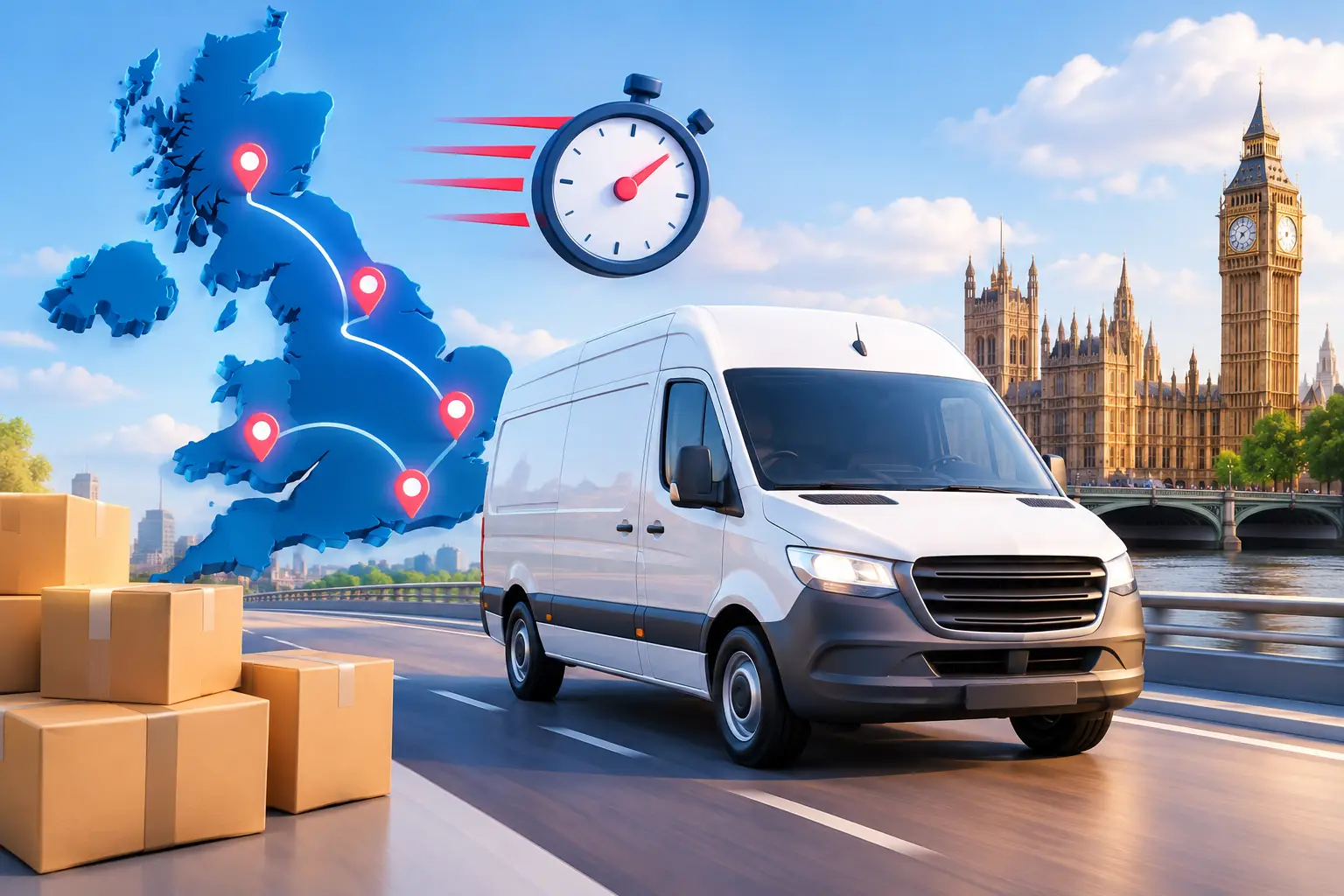
Direct Transport Guide for Urgent UK Deliveries

A missed delivery deadline can stop more than one job. A production line may be waiting for a part, a legal team may need signed documents, or an event crew may be without essential equipment. This direct transport guide explains how dedicated delivery works, when it makes sense, and what you should consider before booking.
Direct transport means your consignment is collected in a vehicle reserved for your job and taken to its destination without entering a parcel sorting depot or being transferred to another vehicle. It is a practical option when timing, careful handling or clear communication matters more than sending an item through a standard multi-drop network.
What direct transport means for your delivery
With a dedicated courier service, the journey is planned around your collection and delivery requirements. The driver collects your item, vehicle or load and travels directly to the agreed destination. There are no intermediate depots, pallet hubs or extra handling stages built into the route.
That difference is particularly useful for urgent, awkward or valuable consignments. Every transfer between vehicles adds another handling point and may make delivery times less predictable. Direct transport reduces those stages, giving you a clearer route from collection to destination.
It does not mean every job needs the largest available vehicle or an immediate collection. Some deliveries are booked in advance, while others need same-day transport. The right service depends on the item, the distance, the delivery deadline and the access available at each end.
When a dedicated vehicle is the right choice
A direct vehicle is often the sensible choice when an item is needed for a specific time or task. For a business, this could be an automotive part needed to complete a repair, stock required for a customer order, or construction materials needed before a team can continue work.
Professional services may need urgent documents, tender paperwork, IT equipment or signed contracts moved securely and promptly. Retailers and suppliers may need to replenish stock between sites. Event, film and television teams may need staging equipment, displays or last-minute production items delivered to a venue.
For private customers, the need is often just as immediate. A forgotten laptop may be needed for work the following morning. Keys, luggage or a passport may have been left behind. You may also need a sofa, washing machine or marketplace purchase collected and delivered without having to arrange van hire yourself.
Direct transport is not only for emergencies. It can also suit planned furniture deliveries, office relocations, regular business runs and small house moves where you want a collection and delivery arranged around your schedule.
Urgent consignments
When a deadline is close, the main benefit is control. A dedicated driver is travelling for your delivery rather than working through a route containing multiple unrelated drops. You can provide collection details, delivery contact information and any access instructions from the outset.
This is helpful when a recipient needs to be ready to receive an item. It also allows practical planning where timing matters, such as coordinating a site delivery, arranging a handover at an office, or getting equipment to a venue before a set-up window closes.
Bulky, fragile or awkward loads
A parcel may fit into a standard courier network. A pallet, long-length component, exhibition stand or piece of furniture may not. Direct transport gives you the chance to select a vehicle that suits the load rather than trying to make the load fit a fixed service.
At DB Couriers, vehicle options range from cars and small vans to medium vans, extra-long-wheelbase vans and Luton vans. The right choice depends on the dimensions, weight, quantity and shape of what you are moving, as well as whether help is needed to plan access at collection and delivery.
Giving accurate details at the quote stage helps avoid problems. Include the item dimensions where possible, the number of pieces, whether the load is boxed or loose, and any stairs, narrow entrances, loading bays or site rules that may affect collection.
Direct transport guide: choosing the right vehicle
The smallest suitable vehicle is not always the best choice. A car can be ideal for urgent documents, keys or a laptop, but it will not be suitable for several boxes of stock or equipment cases. Equally, booking a larger vehicle than needed may not be necessary for a small, time-sensitive item.
A small van can suit cartons, computer equipment, samples and compact furniture. Medium and long-wheelbase vans provide more capacity for stock, tools, business equipment and larger loads. A Luton van is often more appropriate for bulky furniture, office items, exhibition equipment and small house moves.
Vehicle choice is also about loading safely and protecting the item during the journey. A suitable van gives the driver appropriate space to position and secure the load. If you are unsure, describe the consignment clearly when requesting a quote. A good transport plan starts with knowing exactly what needs to move.
Information to provide when booking
Clear booking information helps the collection run smoothly and gives you a more accurate quote. You do not need logistics expertise. The useful details are simply the ones that affect the journey and handling.
Tell your courier what is being collected, where it is going, and when it needs to arrive. Confirm the collection address, delivery address and contact names or telephone numbers for both locations. If the item has dimensions or is especially heavy, bulky or delicate, include that too.
Access details matter. A warehouse may require a booking reference or high-visibility clothing. A city-centre office may have restricted loading times. A residential collection may involve stairs or limited parking. Mentioning these points early allows the journey to be planned properly.
For time-critical work, state the genuine deadline rather than simply saying that the job is urgent. If an automotive part must be at a garage before work can begin, or exhibition equipment must arrive before a venue access slot, that information helps set realistic collection and delivery arrangements.
Direct delivery versus standard courier services
Standard courier services can be suitable for routine parcels where a broad delivery window is acceptable. They are designed around consolidated networks, with items often moving through sorting facilities alongside many other consignments.
Direct delivery takes a different approach. The vehicle and route are arranged for your consignment, which reduces handling and allows more flexible collection arrangements. This can be a better fit for urgent deliveries, larger loads, items that need careful handling or jobs where you need direct communication about the journey.
The trade-off is that dedicated transport is tailored to a specific collection and route. If the item is small, non-urgent and does not need special handling, another service may be more appropriate. The best choice is the one that matches the practical needs of the job, rather than paying for urgency you do not need or accepting a delivery process that does not suit the consignment.
Regular direct transport for businesses
For businesses with recurring transport needs, regular courier support can remove some of the pressure from day-to-day planning. You may have weekly stock transfers, frequent site deliveries, repeat collections from suppliers or occasional urgent jobs that need a dependable point of contact.
A business courier account can make repeat bookings and centralised billing easier, subject to approval. It is particularly useful for operations teams and warehouse staff who need a straightforward way to arrange transport without explaining the same requirements from the beginning each time.
Regular work still benefits from clear instructions. Collection times, delivery contacts, vehicle requirements and any site procedures can change, so keeping the courier informed helps each booking run as planned.
Arrange transport with confidence
Whether you are sending one urgent document from Liverpool, moving a sofa across the North West or arranging a dedicated vehicle for a nationwide business delivery, start with the practical details. What needs moving, when does it need to arrive, and what vehicle is likely to suit it?
A direct transport service gives your consignment a dedicated route and fewer handling stages. Request a free quote to discuss your collection, delivery deadline and vehicle requirements, then arrange transport that fits the job.


Comments