How Proof of Delivery Helps Your Business

A delivery is not fully complete when the vehicle reaches the address. For many businesses, it is complete when there is a clear record showing who received the item, when it arrived and, where appropriate, its condition on arrival. That is how proof of delivery helps your business: it turns a completed journey into useful evidence you can act on.
This matters when a vital automotive part is needed on site, when legal documents must reach the right person, or when valuable event equipment is delivered to a venue. A clear delivery record gives your team confidence to move on to the next job rather than chase an unanswered question.
What proof of delivery records
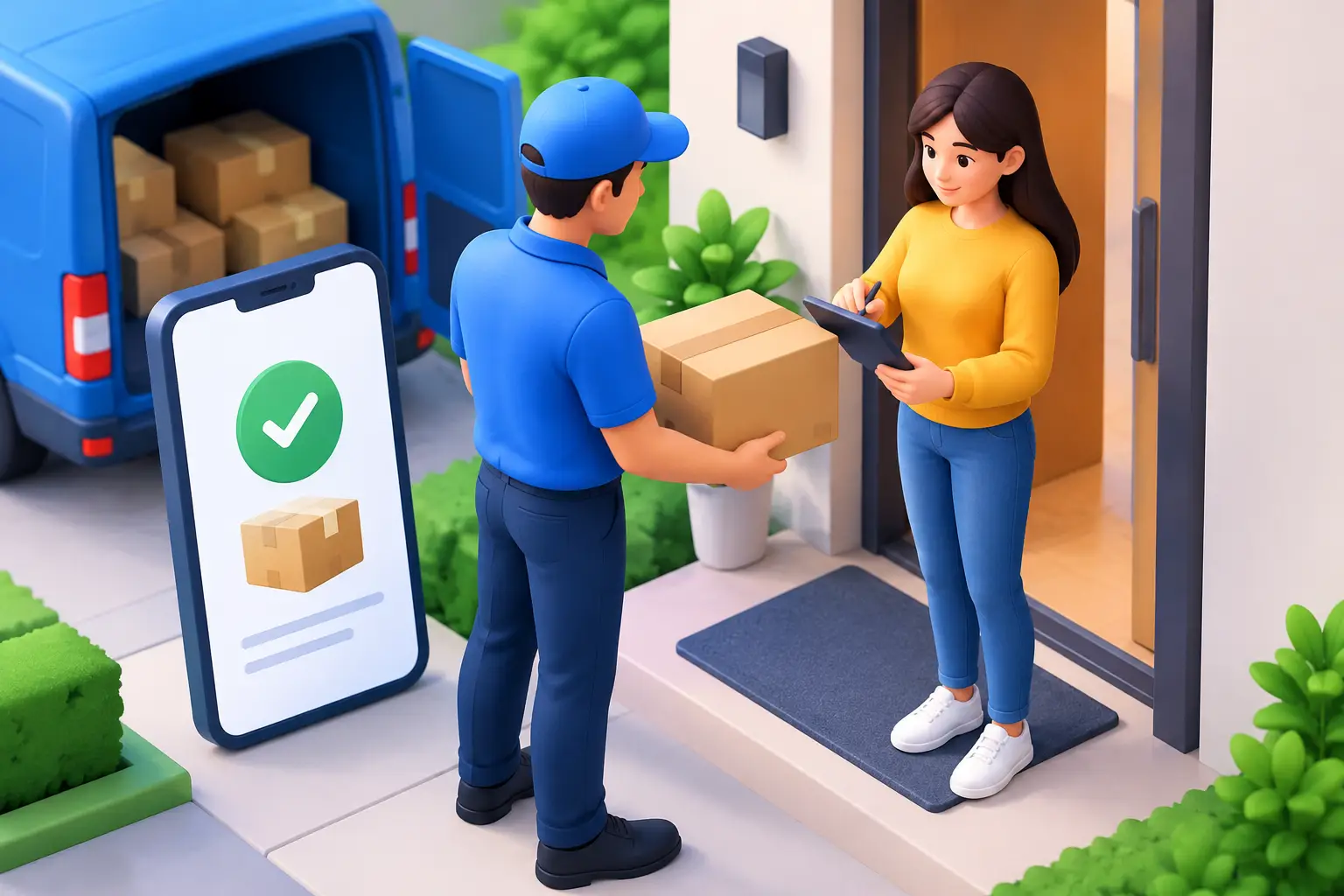
Proof of delivery, often shortened to POD, is confirmation that a consignment has reached its intended destination and been handed over. The exact record can vary according to the delivery and the recipient's requirements. It may include the recipient's name, a signature, the date and time, or a photograph of the item at the delivery point.
For a dedicated courier journey, the record sits alongside a simpler chain of movement. Your consignment is collected and taken directly to its destination in a vehicle selected for the load. It does not need to pass through sorting depots or move between several vehicles. That reduced handling can be particularly useful for urgent, fragile or business-critical items.
POD is not just paperwork. It answers practical questions: Has the item arrived? Was it received by the right department? When can we begin the next stage of work? If there is a query later, your team has a starting point rather than relying on memory or a verbal update.
How proof of delivery helps your business day to day
The most immediate benefit is visibility. A warehouse team sending replacement stock to a customer can confirm receipt before arranging the next dispatch. An operations manager can close off an urgent transport job and update colleagues. A legal practice can evidence that a time-sensitive document reached its destination.
This is especially helpful where several people are involved in one order. The person booking transport may not be the person receiving delivery updates, and neither may be the person speaking to the customer. Clear confirmation keeps those handovers straightforward.
Fewer delivery queries to investigate
Delivery queries take time. A customer may say that an item has not arrived, while a receptionist, goods-in team or site manager has already accepted it. Without a record, staff may need to call the destination, check messages and search through dispatch notes.
A proof of delivery record makes that process more focused. You can check the time of delivery and the recipient details, then speak to the relevant person at the destination if further clarification is needed. It does not remove every query, particularly on a large site with several entrances or departments, but it gives everyone a factual reference point.
That can be valuable for businesses handling frequent deliveries. Small delays spent investigating individual consignments can add up across a busy week.
Better customer communication
Your customers often judge your service by what happens after dispatch as much as by the item itself. If you can confirm that stock, paperwork or equipment has been received, you can give a clear update rather than a vague assurance that it is on its way.
The same applies to internal customers. A production team waiting for a forgotten laptop, a construction crew awaiting supplies or a technician needing a replacement part needs useful information. Confirmation of receipt helps them decide what to do next.
For private customers, the benefit is just as practical. If you have arranged a furniture collection or white goods delivery for a family member, proof of delivery provides reassurance that the item has reached the agreed address. It is a simple detail, but it can remove uncertainty from a job that may already involve several arrangements.
Stronger records for invoicing and administration
Many businesses need to match deliveries to purchase orders, customer orders or completed jobs. Proof of delivery supports that process by showing that transport was carried out and the consignment was received.
It can also help when a customer asks about an invoice. Rather than treating delivery as a separate conversation, your accounts or operations team can refer to the associated delivery details. This is particularly useful for regular transport requirements, where clear records support more organised administration and centralised billing arrangements.
The record is not a replacement for your own order references, delivery instructions or goods-out checks. It works best as part of a tidy process. Include the right reference when booking, make sure the destination contact is correct and tell the courier about any site-specific instructions.
Why direct delivery makes the record more useful
Proof of delivery is most helpful when the journey itself is easy to follow. A dedicated vehicle travelling from collection to destination creates a direct route for the consignment and a clearer handover process.
For example, an engineering business may need an urgent component collected from Liverpool and delivered to a customer site elsewhere in the UK. The booking can include the site contact and delivery requirements, the item is loaded into an appropriate vehicle, and the delivery is confirmed when it is received. There are fewer handling points to account for than on a multi-stage network.
That does not mean every consignment needs the same service. A planned, non-urgent item may suit a next-day delivery, while a time-critical part or sensitive document may call for same-day dedicated transport. The right choice depends on the deadline, size of the load, collection and delivery locations, and the consequences of delay.
At DB Couriers, we select from cars, small vans, medium vans, extra-long-wheelbase vans and Luton vans according to the item and journey. Choosing a suitable vehicle supports safe, sensible transport and avoids paying for capacity you do not need.
Set up deliveries for clear confirmation
The quality of a proof of delivery record depends partly on the information provided at booking. A few details at the start can prevent uncertainty at the end.
Give the full collection and delivery addresses, the name and contact number of the recipient, and any useful access information. If delivery needs to be made to a particular department, loading bay, reception desk or site contact, say so clearly. For larger items, accurate dimensions and weight help ensure the right vehicle is arranged.
It is also worth considering what confirmation you actually need. A signed record may be appropriate for documents or high-value equipment. For a straightforward delivery to a known business address, recipient details and a time record may be sufficient. If you have specific procedures, such as a purchase order number or named authorised recipient, provide them before collection.
Clear instructions protect both sides. They help the driver make the handover efficiently, and they give your team a record that matches the purpose of the delivery.
A useful safeguard, not a substitute for planning
Proof of delivery offers reassurance, but it cannot correct incomplete booking details or unclear expectations. If a site closes early, has restricted access or requires a named person to accept goods, that needs to be identified before the journey begins.
It also records delivery, not the full commercial outcome. A recipient may accept a box before checking its contents, for example. Businesses sending complex orders should maintain their own packing lists, item checks and agreed receiving procedures alongside delivery confirmation.
Used properly, POD is a practical safeguard. It supports accountability without making the process complicated, and it gives you better information when time matters.
Whether you are sending urgent documents, business stock, exhibition equipment or a replacement part, a direct courier service with clear confirmation helps you stay informed from collection to destination. Request a free quote from DB Couriers to arrange a delivery that suits your load, deadline and handover requirements.


Comments