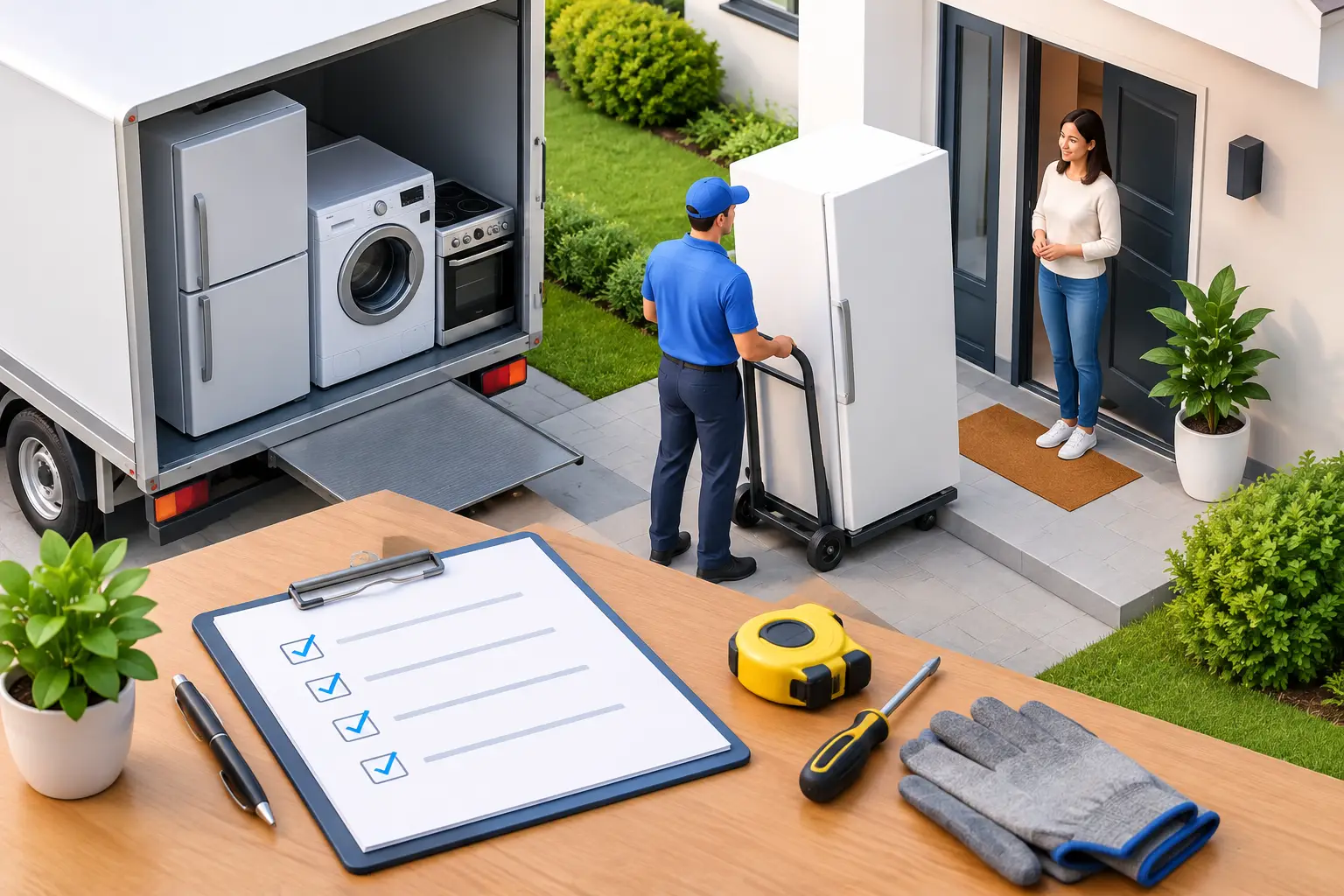
White Goods Delivery: What to Arrange Before Collection

A washing machine that is still full of water, or a fridge that cannot clear the hallway, can stop a collection before the vehicle has even been loaded. With white goods delivery, what to arrange before collection comes down to a few practical details: the appliance must be ready to move, the route must be clear and the right vehicle must be planned for the job.
Whether you are collecting an appliance from a retailer, moving it between homes or buying it through a marketplace, preparation helps avoid delays and unnecessary handling. It also gives your courier the information needed to quote accurately and arrange a suitable collection.
White goods delivery: what to arrange before collection
Start by confirming exactly what is being moved. “A fridge” or “a washing machine” is a useful starting point, but the make, model or dimensions can make a real difference to the vehicle and handling plan. American-style fridge freezers, range cookers and large tumble dryers may need more room than expected, while a slimline washing machine can still be heavy and awkward to carry through a tight property.
Measure the appliance at its widest, deepest and tallest points. If possible, include the packaging if it is still boxed. Then measure the narrowest parts of the route, such as doorways, hallways, staircases, lifts and gates. A few minutes with a tape measure can identify a problem before collection rather than at the doorstep.
Let the courier know whether the appliance is being collected from and delivered to a ground-floor property, flat, shop, warehouse or storage unit. Mention steps, steep paths, shared entrances and restricted parking. These details help us select a suitable vehicle and plan the collection sensibly.
Make the appliance safe to move
White goods should be disconnected and ready before the courier arrives. Delivery drivers transport the appliance. They do not install it, reconnect plumbing or electricity, or carry out specialist disconnection work.
For washing machines, dishwashers and fridge freezers, this normally means switching off the power, disconnecting services safely and removing any remaining water. Check hoses and cable leads can be secured so they do not trail or catch while the item is being carried. If you are unsure how to disconnect an appliance, arrange for a suitably qualified person to do this before collection.
A fridge or freezer needs particular preparation. Empty it fully, remove loose shelves or drawers where practical, and allow time for it to defrost. Wipe away water and dry the interior to reduce the risk of leaks during transport. Keep doors closed and secure them appropriately for the journey, without using a method that could damage the finish.
Washing machines often have transit bolts that protect the drum during movement. If you still have the manufacturer’s instructions and the bolts, check whether they should be fitted before transport. This is especially worth checking when the appliance is travelling a longer distance.
Gas cookers need extra care. Do not attempt a disconnection unless you are qualified to do so. Arrange for the appliance to be safely isolated before collection, and tell the courier what is being moved. Clear information means the collection can be planned around the actual load.
Clear the route from appliance to vehicle
The appliance may fit through the front door, but the full route matters. Move shoes, furniture, rugs, boxes and anything else that could create a trip hazard or reduce turning space. Open internal doors in advance and make sure any shared entrance is accessible.
If collection is from a flat, confirm whether there is a working lift and whether the appliance will fit inside it. Tell us about any flights of stairs, particularly tight turns or low ceilings. It is better to describe access honestly than assume it will be straightforward on the day.
Outside, consider where the vehicle can stop. A close, legal parking space reduces carrying distance and helps protect the appliance from knocks and poor weather. If the address has permit restrictions, loading limits, a gated estate or a narrow lane, share this when booking. The same applies at the delivery address.
For retailer or marketplace collections, check the seller’s collection rules. Some sites require a collection reference, photo identification or a named person to release the item. Others may only allow collection during set opening hours. Have those details ready before the booking is confirmed.
Give accurate collection and delivery details
A clear booking avoids a string of calls while the vehicle is on the road. Provide the full collection and delivery addresses, including postcode, contact names and reliable telephone numbers for both ends of the journey. If the appliance is being collected from someone else, make sure they know the agreed collection window and have given permission for it to be released.
It also helps to explain the condition of the item. Is it new and boxed, used but working, or an untested marketplace purchase? If there is existing cosmetic damage, take dated photographs before collection and let the courier know. This is not about making the process complicated. It gives everyone a clear record of what is being transported.
If you are sending more than one item, list them all. A washing machine plus a dryer, microwave and boxed accessories may require a different vehicle from a single appliance. Include pedestals, loose shelves, manuals and any parts that need to travel with the item.
Choose the right level of help
Some collections are simple: a boxed appliance waiting in a shop loading area, delivered to a ground-floor home with clear access. Others involve stairs, a seller who needs a hand moving the item, or a tight collection point where the vehicle cannot park nearby.
Be clear about what help is available at each address. If someone will assist with loading or unloading, confirm that in advance. If no one can help, say so when requesting a quote. Do not assume assistance is included without discussing the requirement, especially for heavy or bulky items.
The best vehicle depends on the appliance size, the number of items and the journey. A small van may suit one compact appliance, while larger white goods or multiple items may need more load space. A dedicated vehicle also means your items travel directly from collection to destination, without being moved through sorting depots or transferred between vehicles. That reduced handling can be particularly useful for appliances with doors, controls and delicate finishes.
Prepare for arrival at the delivery address
Before the appliance leaves the collection point, make sure the recipient can receive it. They should know the delivery address, have their phone nearby and be able to provide access to the property. If they live in a flat or a building with a concierge, check any entry arrangements in advance.
Create a clear space near the intended room, even though the appliance will not be installed. This gives the recipient somewhere safe to place it while they arrange connection. If the item is replacing an old appliance, decide beforehand where the old one will go. A courier collecting a new washing machine cannot assume the old one is included in the transport unless that has been booked and confirmed.
For a fridge freezer that has travelled on its side or at an angle, follow the manufacturer’s guidance before switching it on. The right waiting period varies by model and how it has been transported, so the instruction manual is the best reference.
A straightforward way to arrange collection
When you request a quote, include the appliance type and dimensions, both addresses, access information, collection timing and any help needed at either end. Photographs of the item and difficult access points can also be useful where available. We can then advise on a suitable vehicle and give you a clear, tailored quote.
DB Couriers provides dedicated white goods transport from Liverpool and across the UK, for one-off personal collections as well as planned business deliveries. Once the practical details are in place, arranging collection is much simpler. Request a free quote and give us the information that will help your appliance travel safely from door to door.
Comments