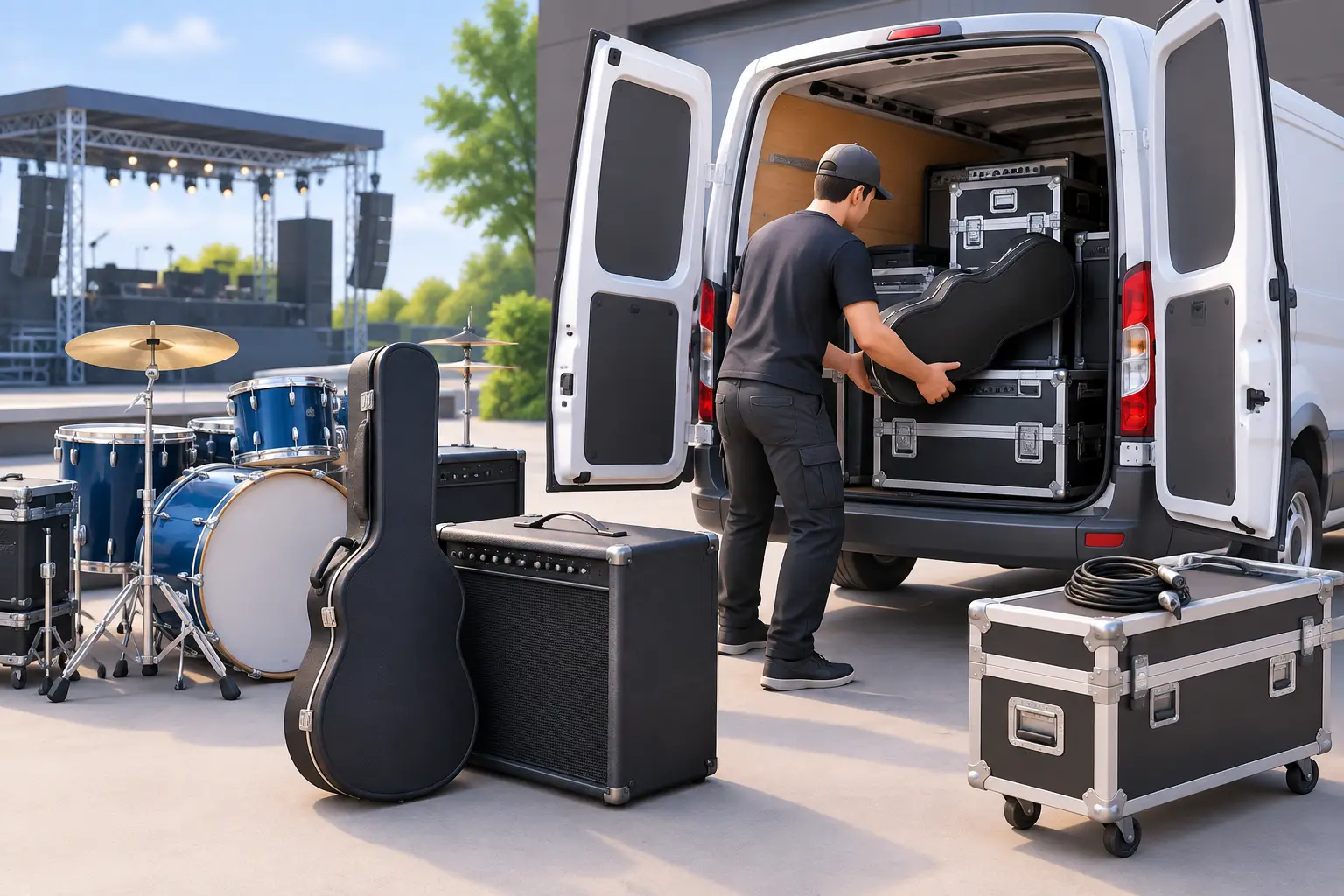
Transporting Musical Instruments and Performance Equipment

A guitar left behind after a festival set, a keyboard needed for a rehearsal, or lighting equipment required at a venue before doors open can quickly become a time-sensitive job. Transporting musical instruments and performance equipment calls for more than available space in a vehicle. You need a clear plan for collection, the right vehicle for the load, careful handling and a direct route to the destination.
For musicians, production teams, venues and event organisers, the value of equipment is not only its purchase cost. A missing item can hold up a soundcheck, delay a performance or leave a crew unable to complete a build. Dedicated transport helps keep the journey straightforward, with your consignment travelling from collection to delivery without depot sorting or transfers between vehicles.
Plan the journey before the equipment is collected
Start with the practical details. Confirm exactly what needs to travel, where it is being collected from and when it must arrive. A collection from a rehearsal room, studio or backstage loading area may involve stairs, limited parking or a narrow access route. The destination may have a timed loading slot, a service entrance or a site contact who needs advance notice.
It also helps to distinguish between items that must travel together and items that can be sent separately. Instruments, stands, cables, speakers, flight cases, staging components and merchandise all have different shapes and handling needs. Sending a short, clear equipment list allows the transport to be planned around the actual load rather than an estimate.
For a same-day booking, let the courier know whether the delivery time is linked to a soundcheck, venue access or a performance start. This gives everyone a realistic basis for planning the collection and journey.
Choose a vehicle that suits the load
The smallest suitable vehicle is not necessarily the right choice. A compact load may fit in a car or small van, while speaker cabinets, drum kits, lighting stands and multiple flight cases may need a medium van, extra-long-wheelbase van or Luton van.
Vehicle choice affects more than capacity. You need enough room for items to be positioned sensibly, with no need to force cases together or stack equipment in a way that makes unloading difficult. Longer or heavier items may also affect how the load is arranged. Providing dimensions, quantities and approximate weights where possible helps avoid unnecessary surprises at collection.
If you are transporting a single cello or guitar in a hard case, the requirements will differ from moving an entire band setup. The same applies to production equipment for a corporate event, theatre performance or film shoot. The right vehicle depends on the mix of items, the access at both ends and the distance involved.
Protect instruments and equipment for transport
Cases provide the first line of protection. Hard cases and purpose-built flight cases are particularly useful for delicate instruments, consoles, lighting units and equipment with vulnerable controls. Close and secure all latches, remove loose accessories where practical, and keep small essential items together in labelled cases or bags.
For instruments, make sure the case fits properly and that nothing inside can move freely. A loose power supply, pedal or microphone can cause damage during transport even if the outer case appears secure. Guitar necks, drum hardware, cymbals and keyboard controls all deserve particular care.
Electronic equipment should travel dry and protected from knocks. Where equipment has removable parts, pack them separately only if that is how the manufacturer intends the item to be transported. If you are unsure, keep the setup simple and use the original packaging or a suitable protective case.
It is also sensible to label similar cases. A production team may have several black flight cases that look identical at a glance. Clear labels showing the item, owner, venue or room can make collection and unloading more organised, especially when equipment is moving between a studio, venue and temporary event space.
Why direct delivery matters for performance equipment
A direct, dedicated vehicle gives you a simpler chain of custody. The equipment is collected and taken straight to its destination, rather than being handled through a parcel network or moved between vehicles. Fewer handovers can be especially helpful when transporting awkward, fragile or time-critical items.
This approach also gives you more control over timing. If a replacement amplifier needs to reach Manchester before an evening performance, or a display and sound system must be at a Liverpool venue for an early build, the journey can be arranged around the requirement. It is not tied to a standard depot schedule.
Direct transport is not only for urgent bookings. It can also suit planned work, such as taking equipment to a tour rehearsal, collecting staging after an event or moving instruments between schools, studios and performance venues. Scheduled transport can make repeat movements easier to organise when dates and access arrangements are known in advance.
Keep communication clear from collection to delivery
A good booking is built on accurate information. Share the collection and delivery addresses, named contacts, phone numbers, access notes and any deadline that matters. If the destination has a loading bay, security desk or specific entrance, include that information before the vehicle sets off.
For larger jobs, agree who will be present at each end. This is particularly useful when equipment belongs to different performers or departments. It reduces confusion over which items are being collected and where they should be delivered.
If plans change, communicate the update as early as possible. Venues can change access arrangements, rehearsals can overrun and production schedules can move. A responsive courier can only adapt the journey when they have the latest information.
Transporting musical instruments and performance equipment for events
Event transport often has a tighter timetable than a normal delivery. A venue may only allow a limited period for loading, while the crew still needs time to set up, test equipment and resolve any technical issues. The delivery is part of the production schedule, not an isolated task.
Build in sensible time for collection, travel and unloading. This does not mean adding unnecessary delay. It means recognising that a set of stage risers, cables and audio equipment takes longer to check and unload than a single case. If there is an essential item that cannot be delayed, identify it clearly so it is easy to locate on arrival.
The same planning applies after the event. Equipment collection may need to happen once the venue is clear, after a strike-down or at a fixed time agreed with the site. A scheduled dedicated vehicle can help take the uncertainty out of getting valuable equipment back to its next location.
When a dedicated courier is the practical choice
You may not need a dedicated vehicle for every item. A small, well-packaged accessory with no deadline may be suitable for a standard service. However, direct transport is often the more practical option when equipment is fragile, bulky, needed urgently or required for a specific booking.
It is also useful when you need the collection and delivery handled as one job. That might mean moving a DJ setup from Wirral to Chester, taking exhibition audio-visual equipment to Warrington, or sending a replacement instrument from Liverpool to another UK venue. The distance matters, but the timing and handling requirements matter just as much.
DB Couriers provides dedicated same-day, next-day and scheduled transport for businesses and private customers. We select a suitable vehicle for the load and take consignments directly from collection to destination, helping reduce unnecessary handling along the way.
When equipment is central to a rehearsal, event or performance, do not leave transport as an afterthought. Share the load details, access requirements and delivery deadline, then arrange a collection that fits the job. Request a free quote from DB Couriers for transporting your instruments and performance equipment with care.
Comments