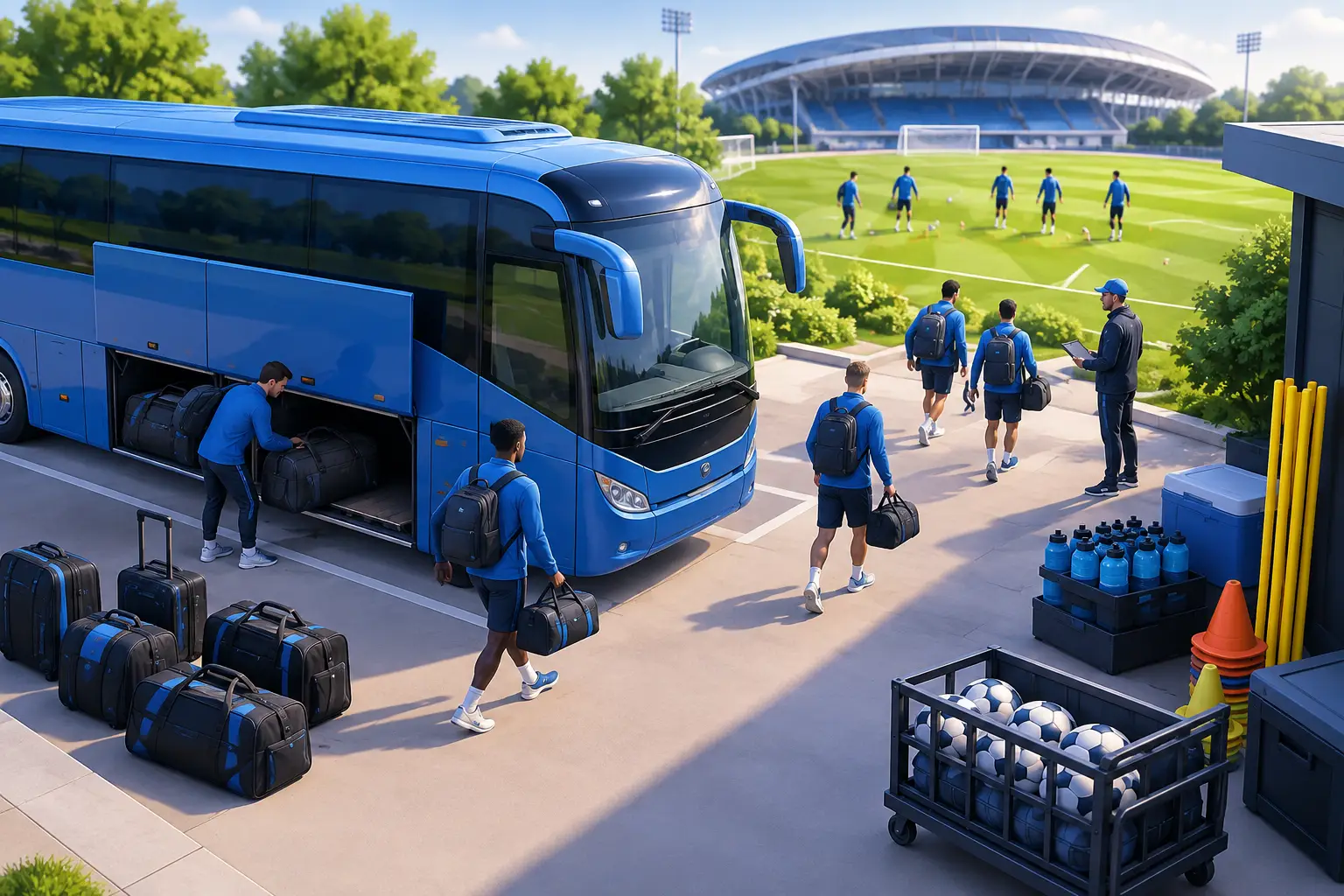
Sports Team Logistics for Matchdays and Training

A missing kit bag can disrupt far more than a warm-up. If a team’s boots, analysis equipment, physio supplies or match shirts are in the wrong place, coaches and players must solve a transport problem at the worst possible time. Effective sports team logistics for matchdays and training keeps essential items moving in the right vehicle, to the right venue, with a clear plan for collection and delivery.
For clubs, academies, schools, event organisers and production teams supporting sport, transport is often arranged around fixed kick-off times and changing schedules. The priority is not simply getting an item from A to B. It is making sure the load is ready when the team needs it, handled carefully and delivered directly without unnecessary transfers.
What matchday transport needs to account for
A matchday has little room for uncertainty. Teams may need to move kit, balls, training aids, refreshments, display materials, recovery equipment, cameras or sponsor items. Some loads are compact but urgent, while others need a larger vehicle because of their volume or shape.
The first decision is what must travel, and when it must arrive. It helps to separate essential match items from items that can follow later if necessary. A set of shirts, goalkeeper gloves or tactical equipment may be needed well before players arrive. Signage or additional stock may have a little more flexibility. This distinction allows the journey to be planned around the real deadline rather than an assumed one.
Venue access also matters. Stadiums, leisure centres, training grounds and schools may have designated loading areas, restricted entry points or a named contact for arrivals. Give your courier the collection address, venue details, contact numbers and the time the goods need to be on site. Clear instructions reduce avoidable calls when the vehicle is close to the destination.
For an away fixture, direct transport can be particularly useful. A dedicated vehicle collects the items and takes them straight to the venue, rather than sending them through sorting depots or between multiple vehicles. That means fewer handling points for valuable or awkward equipment, and a simpler route for time-sensitive consignments.
Sports team logistics for matchdays and training: plan by load
The right vehicle depends on the actual load, not just the label “team kit”. A small bag of documents, tablets or forgotten boots may suit a car. Several kit bags, boxes of merchandise and portable equipment may need a small or medium van. Goals, larger display materials, multiple equipment cases or bulky supplies can require an extra-long-wheelbase or Luton van.
Providing accurate dimensions, approximate weight and the number of items helps us recommend a suitable vehicle. Mention anything that cannot be stacked, needs to remain upright or has fragile components. Sports equipment is often more awkward than it first appears, particularly when it includes wheeled cases, folded structures or long items.
A vehicle that is too small can lead to delays or poor loading choices. One that is far larger than needed may not be the most practical option for site access or your budget. A tailored quote based on the journey and load gives you a clearer basis for arranging transport.
Training sessions need the same attention
Training logistics are usually less visible than matchday arrangements, but a missed delivery can still affect the session. A coach may need equipment moved between sites, an academy may require regular kit transport, or a club may need to send analysis equipment to a different ground at short notice.
Recurring training movements benefit from a simple routine. Keep an up-to-date equipment list, identify the usual collection and delivery contacts, and note any venue access rules. When the same journey is booked regularly, this information makes repeat arrangements quicker and easier to manage.
However, routine does not remove the need for flexibility. Training venues change, sessions are rescheduled and equipment can be left at a previous location. A dedicated same-day courier can be a practical option when an important item must be collected and taken directly to a training ground or team hotel.
Build a practical transport plan
Good sports transport plans do not need to be complicated. They need to reflect the points at which a delay would cause a problem. Start with the fixture list and training schedule, then work backwards from the required arrival time.
Consider these four details before booking:
The final delivery deadline, including time needed to unload and check the items.
The full load, with quantities, dimensions and any handling requirements.
Collection and delivery contacts who can confirm access and receive the consignment.
A contingency for last-minute items, such as forgotten laptops, replacement kit or production equipment.
This preparation is useful for one-off fixtures and larger sporting events alike. If several collections are involved, decide whether they should travel together or whether one essential consignment should go separately. Combining loads can be sensible where timings and destinations align. Sending a dedicated vehicle for the most critical item may be the better choice where there is no flexibility around arrival.
It also helps to avoid vague collection instructions. “The kit is at the ground” is not enough if the ground has several entrances and the person holding the keys is elsewhere. Give the exact handover point, a contact number and any details about parking, gates or loading restrictions.
Last-minute problems: stay specific
Even well-organised teams face last-minute changes. A player leaves a bag at home, an essential laptop is left at an office, or a supplier sends an item to the wrong address. The quickest way to arrange help is to be precise about what is needed.
State where the item is, where it needs to go, the latest useful arrival time and its size. If the recipient cannot wait at the venue, agree an alternative handover contact. If there are multiple items, confirm which ones are essential so that priority is clear.
Calm communication is especially valuable here. You need realistic collection and delivery information, confirmation of the vehicle being used and a clear point of contact throughout the job. It allows coaches, managers and organisers to focus on the fixture rather than chasing transport updates.
Direct delivery reduces unnecessary handling
Team equipment often carries more value than its replacement cost suggests. A kit bag contains items fitted to players. An equipment case may hold cameras, tablets or specialist tools. A box of promotional materials may be essential to an event set-up. Each unnecessary transfer increases the chance of items being misplaced, delayed or handled in a way that does not suit the load.
With a dedicated courier service, the consignment travels from collection to destination in one vehicle. This approach suits urgent matchday deliveries, scheduled equipment movements and bulky loads that need careful handling. It is also useful when collection times need to fit around a training session, warehouse opening hours or venue access arrangements.
DB Couriers can arrange dedicated transport from Liverpool and across the North West, as well as nationwide UK collections and deliveries. Whether you are moving a small but urgent item or a van load of team equipment, we can discuss the load, route and timings before collection.
When regular bookings make sense
Some clubs and sports organisations have predictable transport needs throughout the season. This may include regular movements between a storage location and training ground, kit transport for away fixtures, or deliveries of supplies to events. In these cases, a business courier account can help keep repeat bookings and billing more straightforward, subject to approval.
Regular work is still not one-size-fits-all. A youth academy operating locally may need smaller, frequent collections. A club travelling nationally may need different vehicle sizes across the season. Event teams may have intense periods around tournaments followed by quiet weeks. The most useful arrangement is one that reflects your actual schedule rather than forcing every job into the same pattern.
Matchdays run better when transport is treated as part of the preparation, not a problem to solve at the gate. Share the details early where you can, keep contingency contacts to hand, and use a suitable dedicated vehicle when timing and careful handling matter. To arrange transport for your next fixture or training session, request a free quote.
Comments