How to Package Fragile Items for Van Transport

A fragile item can look secure on a workbench, then crack because it slides a few centimetres in transit. That is why learning how to package fragile items for van transport means thinking beyond bubble wrap. The item needs protection from knocks, vibration, pressure from other loads and movement inside its packaging.
Whether you are sending production equipment, glass displays, a forgotten laptop, antiques or a piece of furniture with delicate parts, careful preparation makes collection and delivery much more straightforward. The right packaging also helps the driver understand what needs extra care when the vehicle is being loaded.
Start with the item, not the box
Before choosing packaging, look at the item’s weight, shape and weak points. A framed mirror needs its corners protected. A computer monitor needs support around the screen and stand. Ceramic items need cushioning between every piece, while a cabinet may need drawers and doors secured before it moves.
If an item has removable parts, take them off where practical. Wrap and label them separately, then keep them with the main item. This reduces strain on hinges, fittings and protruding sections. For example, remove a lampshade from its base, detach loose shelves from a unit and secure cables so they cannot catch during handling.
Original manufacturer packaging is often a good option for electronics and specialist equipment because it was designed to hold the item in position. If you do not have it, choose a box that is slightly larger than the item once wrapped. A box that is too large leaves room for movement. One that is too small can put pressure directly on vulnerable edges.
Use layers of protection
Good packaging works in layers. The inner layer prevents surface damage, the cushioning absorbs shocks, and the outer layer keeps the package stable. Do not rely on one thick wrap alone, particularly for heavy or irregularly shaped items.
Start by covering the surface with clean packing paper, foam sheets or a soft protective wrap. This is particularly useful for polished wood, painted surfaces, screens and glass, where bubble wrap can sometimes mark a surface if it is pressed on for a long period.
Add bubble wrap, corrugated cardboard or foam around the item, paying close attention to corners and edges. Secure the wrap with tape, but avoid placing tape directly on delicate finishes. For glass, mirrors and framed artwork, cardboard corner protectors and a rigid board across the face offer more support than bubble wrap by itself.
Then place the item in a strong double-walled box or suitable crate. Fill gaps with packing paper, foam chips, air cushions or folded cardboard. The aim is not to pack the box as tightly as possible. It is to stop the contents shifting when the box is gently moved from side to side.
A quick test helps. Close the box without sealing it and carefully lift it a few centimetres. If you can hear or feel movement inside, add more cushioning. If the sides are bulging, use a larger box rather than forcing the lid shut.
Wrap individual items separately
When packing several fragile items together, wrap each one on its own. Plates, glasses, ceramics and small decorative pieces should never sit directly against one another. Place a cushioning layer between them and build from the bottom up, with heavier pieces below lighter ones.
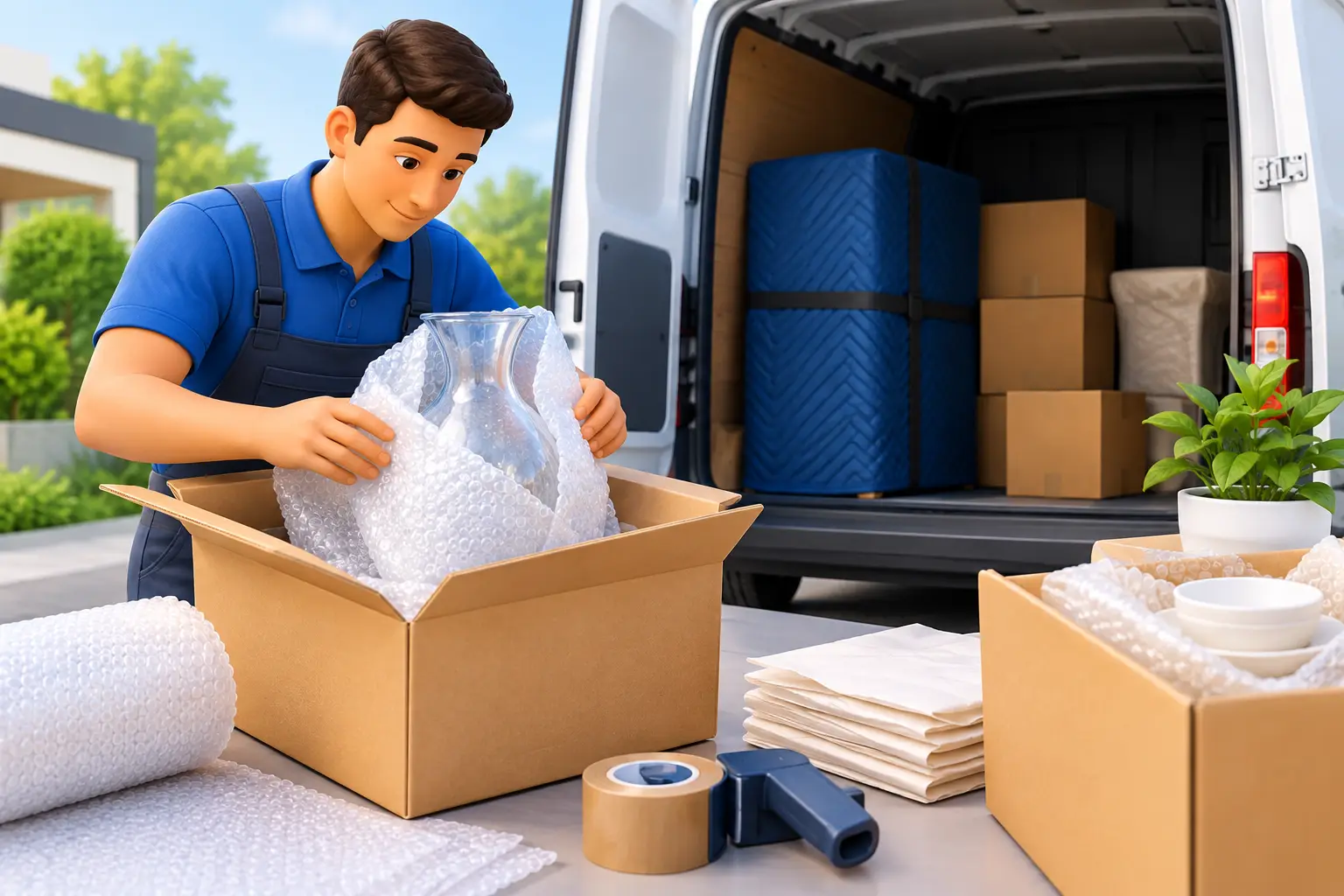
For glasses and vases, fill the hollow centre with soft paper before wrapping the outside. This gives the item support from within. Pack glasses upright where possible and use dividers for a larger quantity. For plates, pack them on their edge with padding between each plate, rather than stacking them flat under their own weight.
Choose packaging that suits the journey
The correct level of packaging depends on the item and the distance it will travel. A short local collection still involves loading, braking and cornering. A longer UK journey may bring more road vibration and more time in the vehicle. Heavy items need stronger outer packaging and firmer internal support than lightweight ornaments.
Cardboard boxes are useful for many items, but they are not suitable for every job. A heavy stone lamp, large mirror or valuable piece of equipment may need a reinforced crate, purpose-made transit case or a timber frame. If you are unsure, avoid a weak box simply because it is available. Packaging that collapses under the item’s weight creates a problem before the vehicle has even left.
Furniture often needs a different approach. Protect corners, legs and exposed surfaces with furniture blankets, foam and corrugated card. Wrap drawers and doors so they cannot open. Glass shelves should be removed and packed separately where possible. For a sofa or upholstered chair, use a clean protective covering that guards against scuffs and dust without trapping sharp tape against the fabric.
Seal, label and record what matters
Use strong packing tape along the centre seam and both edges of the box. For heavier cartons, tape in an H pattern across the top and bottom. Reinforce handles or weak points, but do not create makeshift handles from tape for a box that is too heavy to lift safely.
Clear labels are useful, but they are not a substitute for proper packing. Mark the outer packaging with “Fragile”, “This Way Up” or “Do Not Stack” where appropriate. Make sure the labels are visible from more than one side. If a box must stay upright because it contains a screen, liquid-free appliance component or delicate mechanism, say so when arranging transport as well.
For business consignments, include a clear delivery label with the recipient’s name, full address, contact number and any reference number needed at the destination. It is sensible to photograph valuable or condition-sensitive items before collection. This gives you a simple record of their condition and how they were packed.
Prepare the load for the van
Packaging protects the item, but safe loading protects the package. Fragile boxes should be loaded on a flat, stable surface, not balanced on top of uneven goods. Keep them away from loose tools, metal components and items that could shift into them.
Heavier consignments should sit low in the vehicle. Lighter fragile boxes can go above them only when there is a secure, level space and no risk of crushing. Nothing should be placed on a box marked as non-stackable. Large items such as mirrors, screens and panels should be kept upright when their design requires it, supported so they cannot tip or rub against hard edges.
A dedicated van journey is particularly helpful for fragile consignments because the load travels directly from collection to destination rather than being passed through sorting depots or transferred between vehicles. That reduced handling does not remove the need for careful packaging, but it reduces the number of occasions when an item needs to be moved.
When you book, give an accurate description of the item, its dimensions, weight and packaging. Mention awkward shapes, glass, high-value equipment and anything that must remain upright. This allows the right vehicle to be selected and the load to be planned sensibly. A small box may fit in a car, while several framed displays or a large piece of furniture may need the stable floor space of a van.
Common packing mistakes to avoid
The most frequent issue is empty space inside a box. It can seem harmless, but even a small amount of movement allows fragile items to build momentum when the vehicle brakes or turns. Another problem is using a single oversized blanket or layer of bubble wrap around a sharp-edged item. Without rigid edge protection, pressure can still reach the vulnerable point.
Avoid mixing heavy and delicate items in the same carton. A cast-metal part, for example, can damage a smaller component even when both are wrapped. Do not use damaged, damp or previously crushed boxes. Their strength has already been compromised.
It is also worth avoiding vague instructions. “Handle with care” is helpful, but it does not explain that a package contains a glass panel which must stay upright, or an electronic device that should not have anything stacked on it. Specific information supports better handling from collection to delivery.
When extra planning is worthwhile
Some items need more than standard box-and-wrap preparation. Large artwork, antique furniture, exhibition stands, delicate instruments and fragile business equipment can have unusual dimensions or sensitive components. In these cases, measure the item fully, including its protective packaging, and plan the route from the room or premises to the vehicle.
Check doorways, stairwells, lifts and access points before collection. An item can be well packed but still be damaged by a tight turn through a doorway. If there are access restrictions, parking limitations or a particular collection contact, provide those details in advance.
DB Couriers can arrange direct transport in a suitable vehicle for fragile personal and business consignments, from Liverpool and the North West to destinations across the UK. Tell us what is being moved and how it has been prepared, and we can help you plan a practical collection. Request a free quote when you are ready to arrange transport.
Comments