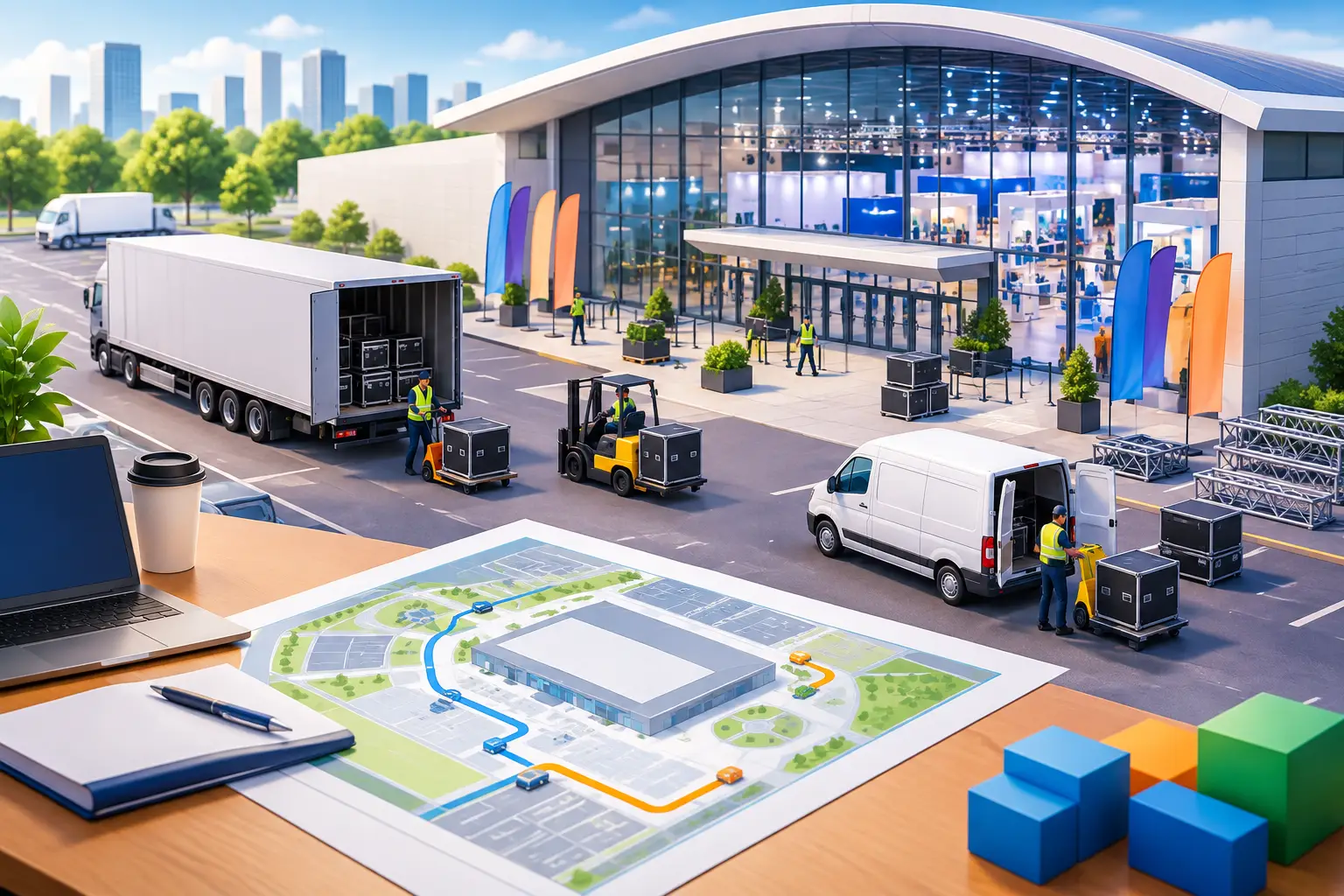
Event and Exhibition Transport Planning Guide

A stand can look complete in the warehouse and still miss its opening slot because one flight case, display panel or power lead has been left behind. Event and exhibition transport: a planning guide starts with that reality. The job is not simply moving items from A to B. It is getting the right equipment to the right entrance, at the right time, in a condition that allows your team to get on with the build.
For exhibitors, event organisers and production teams, transport needs to fit around venue rules, timed access and a schedule that can change at short notice. Careful planning reduces last-minute calls, avoids unnecessary handling and gives you a clear plan for both delivery and collection.
Start with the venue, not the vehicle
Before arranging transport, confirm exactly where your items need to go. Large venues often have separate loading bays, exhibitor entrances and vehicle waiting areas. Your driver may need a booking reference, stand number, exhibitor name or a delivery time assigned by the venue.
Ask the organiser for the build-up and breakdown schedule. A delivery arriving too early may not be allowed into the loading area, while a late arrival can leave your team with less time to install displays, test equipment or prepare stock. If you are delivering to a city-centre venue, check whether access restrictions, height limits or loading time limits apply.
It also helps to establish who will meet the driver. A named contact with a mobile number is more useful than a general office line when a vehicle is at a busy loading bay. Make sure they know what is arriving, how many pieces to expect and whether any cases or boxes need to be checked in.
Build in time for the final metres
The distance from the loading bay to your stand can be longer than expected. Some venues require goods to be taken through service corridors, lifts or designated routes. If your display includes large panels, heavy cases or awkward furniture, consider how it will move after it leaves the vehicle.
A dedicated courier can take the consignment directly from collection to the venue in one vehicle. That reduces handling between collection and delivery, which is particularly useful for fragile graphics, product samples and time-sensitive equipment. It does not remove the need for a venue plan, but it gives you greater control over the road journey.
Create an exhibition transport list that works on site
A simple item list is one of the most useful planning tools you can have. It should be practical enough for the person packing the vehicle and clear enough for the team receiving it. Avoid vague descriptions such as “stand equipment” where possible.
Include the number of items, their approximate size, any particularly heavy pieces and whether they are fragile. Record serial numbers for valuable electronic equipment if that is part of your own process. Label each case or box with your company name, stand number and a contact number, especially where similar crates from several exhibitors will be moving through the same loading area.
For a larger event, divide the list into four groups:
Stand structure, graphics and flooring
Screens, lighting, laptops, leads and other technical equipment
Product samples, brochures, promotional stock and giveaways
Furniture, tools, personal items and spares
Keep essential items easy to reach. A laptop, a box of leads or a set of fixing tools should not be buried behind bulky display sections if they are needed first. Equally, pack fragile items so they cannot shift during the journey. Protective cases, internal padding and sensible loading order all make a difference.
Choose a vehicle for the load and the venue
Vehicle choice should be based on more than whether everything physically fits. You need room to load safely, protect the contents and access the venue without creating difficulties at the other end.
A car may suit urgent documents, a forgotten laptop, small samples or a box of essential parts. Small and medium vans can work well for compact displays, literature, pop-up banners and several cases of equipment. For larger exhibition stands, pallets, furniture or multiple flight cases, an extra-long-wheelbase or Luton van may be more appropriate.
There is a trade-off. A larger vehicle provides more capacity, but it may be less convenient at a restricted loading bay or a venue with height limits. A smaller vehicle may be easier to position but could mean a second journey if the load has been underestimated. Share accurate dimensions, quantities and photographs where available when requesting a quote. This helps the transport provider recommend a vehicle that suits the job.
Plan collection as carefully as delivery
The end of an exhibition is often more pressured than the build. Your team may be tired, the venue may be clearing quickly and equipment may need to be packed away before a collection slot. Arrange the return journey before the event begins, particularly if the items are needed at another venue, back at your office or for a customer delivery.
Confirm the breakdown time and the latest time items must be removed. If collection cannot happen immediately after the show closes, establish whether the venue has a designated holding area and what its process is. Do not assume that cases can be left at the stand until it is convenient to collect them.
Use the same item list for the return. It is an effective way to check that every banner, cable, panel and sample case is accounted for before the vehicle leaves. If stock has been used or new materials have been collected during the show, update the expected load so the return vehicle remains suitable.
Prepare for changes without losing control
Events rarely run exactly to plan. A late-running build, a changed stand location or an urgent need for replacement equipment can affect transport arrangements. The aim is not to predict every problem. It is to make changes easier to manage.
Keep key details in one place: venue address, loading bay instructions, stand number, event contact, driver contact, collection reference and a current item list. Give your transport provider clear collection and delivery information from the outset, then let them know promptly if something changes.
For urgent replacement items, direct same-day transport can be particularly useful. A forgotten laptop, spare screen, printed graphics or essential automotive-style component for a demonstration may be needed before doors open. Direct delivery means the consignment travels from collection to destination without being passed through sorting depots or transferred between vehicles.
Consider whether a dedicated vehicle is the right choice
Not every exhibition load needs a dedicated vehicle. Small, non-urgent items that can arrive well in advance may suit a different arrangement. However, dedicated transport is often the better fit when timing, condition and direct communication matter.
It is especially useful for valuable equipment, fragile display materials, bulky stand elements and stock that must arrive within a defined build-up window. You also have one collection point, one vehicle and a clearer line of communication from collection through to delivery. For events across the North West or further afield, this can simplify the journey from your Liverpool base, office, warehouse or supplier to a venue anywhere in the UK.
DB Couriers can arrange dedicated same-day, scheduled and next-day transport for exhibition equipment, event materials and related business consignments. We select the vehicle around the load and journey, then collect and deliver directly with reduced handling along the way.
A final check before collection
Before the vehicle arrives, check the address and access instructions one last time. Confirm that the load is packed, labelled and ready at the agreed collection point. Make sure the receiving contact knows when to expect the delivery and has the details needed to direct it to the correct entrance.
Good event transport planning gives your team more time where it counts: on the stand, with customers and focused on the event itself. If you have an exhibition, conference or production schedule approaching, request a free quote and discuss the vehicle, collection and delivery plan that fits your load.
Comments