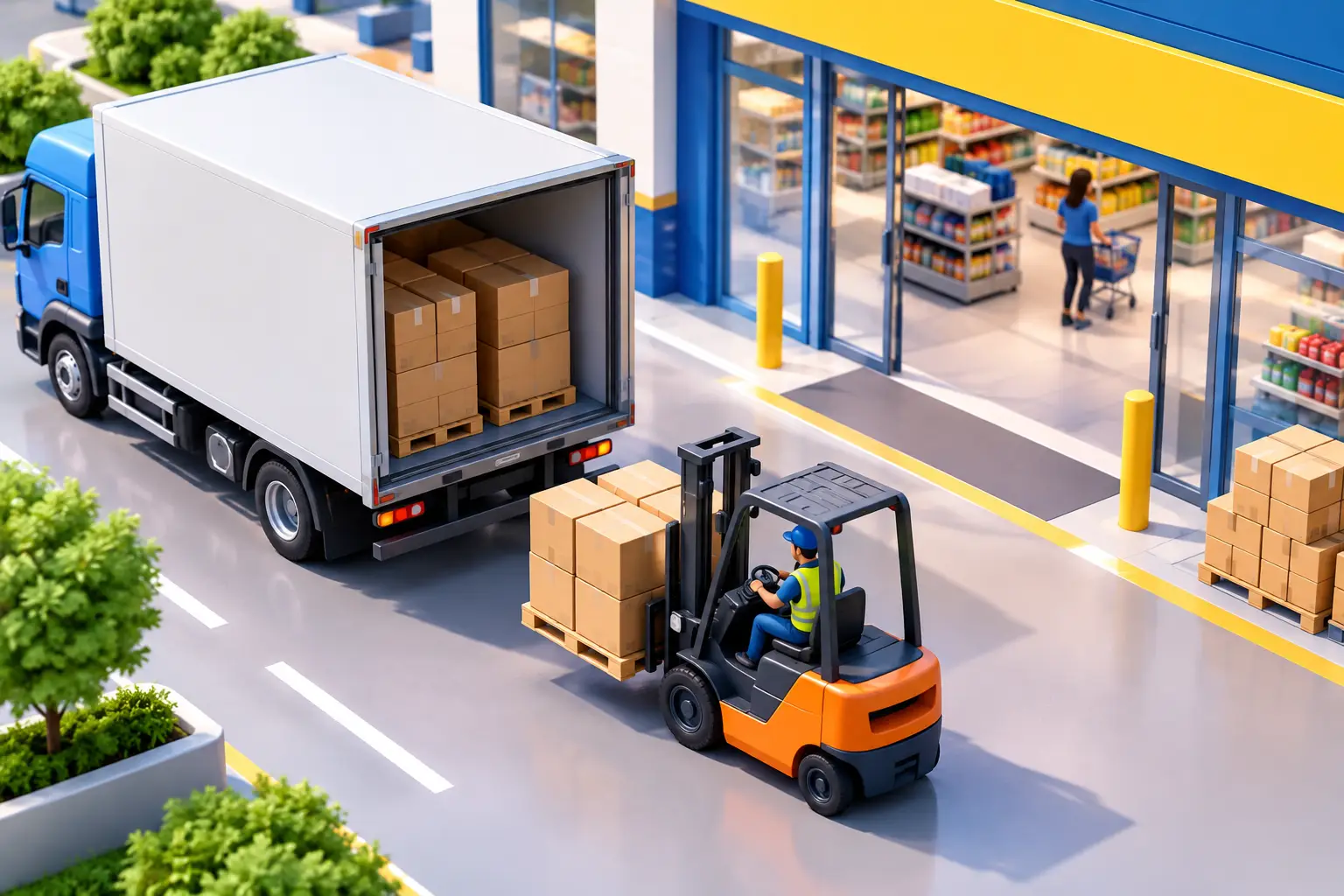
Retail Transport Example for Urgent Stock Moves

A retail transport example often starts with a problem that cannot wait for the next standard delivery run. A best-selling line has sold through at one branch. A display has been left at a supplier. A point-of-sale unit is needed before a store opening, or essential equipment has to reach a pop-up event that day. In each case, the job is not simply to move a parcel. It is to protect a trading day, a launch or a customer experience.
For retailers, direct transport gives you a practical option when stock, fixtures or equipment needs to travel from collection to destination without passing through sorting depots. A dedicated vehicle is selected for the load, collected at an agreed point and driven directly to where it is needed.
A retail transport example: replacing urgent stock
Imagine a Liverpool retailer with a busy branch in Manchester. A popular product has sold faster than expected, but there is spare stock at a warehouse or another store. Waiting for a routine replenishment could mean empty shelves during a high-demand period.
A dedicated courier can collect the required cartons or palletised stock and take them straight to the branch. The vehicle does not make unrelated drops, and the goods are not transferred between vehicles. This reduced handling is useful for boxed stock, fragile displays and items that need to arrive in saleable condition.
The store team can prepare for the delivery, make space in the stockroom and replenish the shop floor sooner. For an operations manager, this is often the real value: a clear plan, a suitable vehicle and direct movement of stock when the usual supply route does not match the urgency of the situation.
It is not necessary to use same-day transport for every replenishment. Planned, regular stock movements may be better suited to scheduled transport, particularly where collection and delivery patterns are predictable. Dedicated same-day delivery is most useful when a missed sale, store deadline or operational issue justifies the faster response.
Retail transport is more than stock transfers
Retail transport covers a wide range of jobs, and the right approach depends on what is moving and why. A single forgotten laptop can be as urgent as several cartons of stock if it contains the files needed for a buying meeting. A new shop display may be bulky but lightweight, while a white goods collection requires more room and careful loading.
Common requirements include moving stock between branches, collecting goods from a supplier, delivering point-of-sale materials, transporting exhibition equipment and taking fixtures to a new retail space. Private customers may also need help with a retail or marketplace collection, such as a sofa, wardrobe or washing machine that will not fit in their car.
The details matter before a vehicle is assigned. You should confirm the collection and delivery addresses, number of items, approximate dimensions, weight where known, and whether there are access restrictions at either end. Loading bays, stairs, timed store deliveries and city-centre access can all affect the plan.
Store openings and promotional displays
A retail launch has a fixed date. If a display stand, branded signage or promotional stock is delayed, staff may be left setting up with incomplete materials. Direct transport is useful here because the consignment can travel as one dedicated load, rather than being split into a wider network.
For example, a marketing team may need event materials collected from a printer in Warrington and delivered to a venue in Chester before an evening set-up. The vehicle can be chosen around the volume and shape of the load, from a car for documents and smaller items to a van for stands, stock and equipment.
The same principle applies to a pop-up shop or concession refresh. Clear communication about collection times, venue contacts and unloading arrangements helps prevent avoidable delays when schedules are tight.
Moving fixtures, furniture and white goods
Retail transport is also relevant when the item itself is large. A shop may need shelving, counters or display furniture moved between sites. A private buyer may have purchased furniture through a retailer or online marketplace and need it collected and delivered to their home.
These jobs benefit from choosing enough space from the start. An extra-long-wheelbase or Luton van may be more suitable for larger furniture, multiple bulky items or an office relocation, while a smaller van can be a sensible choice for compact loads. The right vehicle helps keep the journey straightforward and avoids trying to make an unsuitable load fit.
It is also worth being realistic about what the service includes. Transport can be arranged for furniture, white goods and small house moves, but access needs should be discussed in advance. Tell the courier about floors, narrow entrances, parking limitations and any assistance available at collection and delivery.
Why direct delivery helps retail operations
Retail teams are often working around opening hours, staffing levels and sales activity. Each extra handover creates another point where information can be missed or goods can be delayed. Direct delivery reduces those handovers by keeping the consignment in one dedicated vehicle from collection to destination.
That does not remove the need for planning. It makes planning more useful. Once the item count, size, addresses and deadlines are clear, you can agree a collection arrangement that works for your warehouse, supplier or store. You also have a clearer point of contact if plans change during the day.
For fragile or presentation-sensitive items, reduced handling can be particularly valuable. Display materials, boxed electronics, shop fittings and event equipment may all need careful loading and transport. Where an item is unusually shaped or especially important, sharing photographs and measurements before booking can help identify the most appropriate vehicle.
At DB Couriers, we provide dedicated transport for one-off urgent consignments and ongoing retail requirements. Based in Liverpool, we collect and deliver across the North West and nationwide, with vehicle options ranging from cars and small vans to larger vans and Luton vans.
Choosing between same-day, next-day and scheduled transport
The best service is the one that matches the consequence of delay. Same-day dedicated delivery suits urgent replacement stock, forgotten equipment, launch materials and time-sensitive collections. It gives the load a direct journey once collected.
Next-day delivery can be a more practical choice where the delivery has a firm deadline but does not need to move immediately. This can work well for planned stock top-ups, documents and non-urgent supplier collections.
Scheduled transport is useful when your business makes repeat movements between locations. A retailer with regular branch transfers, supplier collections or event work can benefit from an agreed routine. If you have frequent bookings, a business courier account may also help with repeat arrangements and centralised billing, subject to approval.
The key is not to assume that the fastest option is automatically the right one. A clear quote should reflect the journey, the vehicle required and the handling needs of the consignment. Giving accurate information at the outset helps avoid last-minute changes and makes it easier to organise the right transport.
Information to have ready when booking
A quick, accurate booking starts with a few practical details. Have the collection and delivery postcodes, contact names and phone numbers ready. Confirm what is being moved, how many items there are and whether the items are boxed, palletised or loose.
You should also mention any deadline, booking-in requirement, loading bay instructions or restricted access. For a retail collection, it helps to check that the supplier has released the goods and that someone will be available to hand them over. For delivery to a branch or event venue, make sure the receiving contact knows what is arriving and when.
If you are unsure which vehicle is suitable, describe the load as clearly as possible. Measurements, photographs and an honest description of access can make a significant difference. A courier can then advise whether a car, small van, medium van, extra-long-wheelbase van or Luton van is appropriate.
When stock, equipment or retail furniture needs to move without unnecessary stops, direct transport gives you a straightforward route from problem to delivery. Request a free quote to arrange a collection or discuss a regular retail transport requirement.
Comments