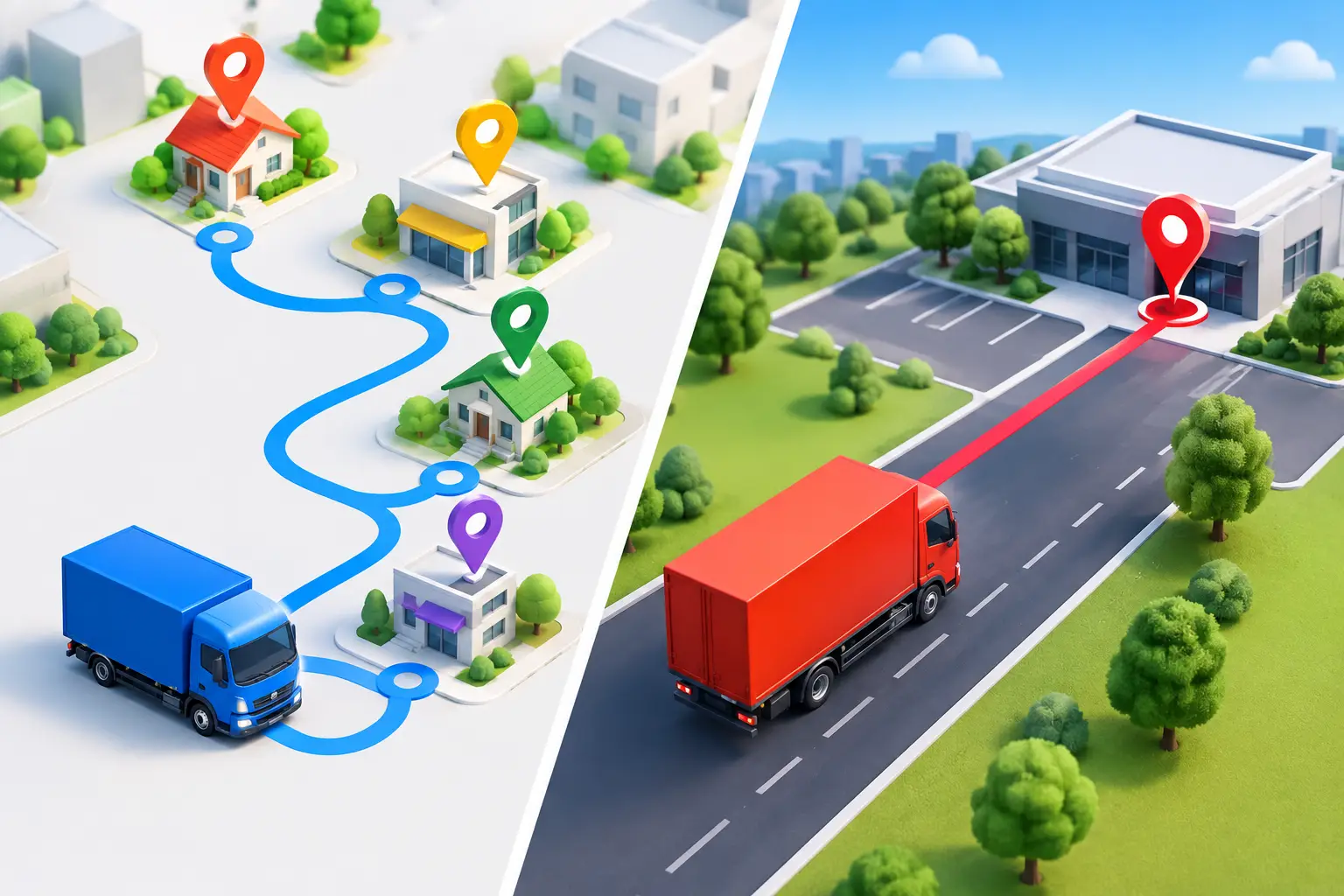
Multi-Drop Delivery vs Dedicated Direct Delivery

A replacement machine part is needed before the next shift. A solicitor needs signed documents delivered the same day. Or perhaps a sofa bought online needs collecting from another town. In each case, the choice between multi-drop delivery vs dedicated direct delivery affects more than the price. It determines how the item travels, how often it is handled and how much control you have over the journey.
Neither option is automatically right for every consignment. Multi-drop services suit many routine parcel deliveries. Dedicated direct delivery is designed for items that need to travel from collection to destination in one vehicle, with no depot sorting or additional drops along the way. Knowing the difference helps you book the service that matches the job.
What is multi-drop delivery?
Multi-drop delivery is a route where one driver carries consignments for several customers. The vehicle collects or receives a number of items, then delivers them to different addresses in an order planned around the route. Parcels may also move through a sorting depot before the final delivery vehicle takes them out.
This model is often a practical choice for standard, non-urgent parcels. By grouping deliveries together, the carrier can spread the journey cost across several consignments. If your item is small, well packaged and does not need to arrive at a precise time, it can be an appropriate option.
The trade-off is that your delivery is one stop within a wider operation. Its route may include other collections, deliveries and depot handling. Delivery timings are usually broader, because they depend on the progress of the whole route rather than one direct journey.
For everyday stock replenishment, documents that are not time-sensitive or routine online purchases, that may be perfectly acceptable. For a consignment that holds up a project, a production schedule or a customer appointment, it may not offer the level of control you need.
What is dedicated direct delivery?
Dedicated direct delivery means a vehicle is assigned to your consignment. Once collected, it travels straight to the delivery address. The item does not go into a parcel sorting network, move between vehicles or wait while other deliveries are completed.
This does not mean every journey is identical. The right vehicle depends on the size, weight and shape of the load. A forgotten laptop or urgent paperwork may suit a car or small van. Automotive parts, boxed stock and equipment may need a larger van. Pallets, exhibition materials, furniture and office items may require an extra-long-wheelbase or Luton van.
The key difference is the journey plan. Your collection and destination are the focus, so there are fewer handling points and a clearer view of the route from start to finish. It is particularly useful when an item is urgent, awkward to move, valuable to your operation or difficult to replace at short notice.
Multi-drop delivery vs dedicated direct delivery: the practical differences
The main distinction is not simply speed. It is how the delivery is managed.
Route and timing
With multi-drop delivery, the carrier builds a route around several consignments. Your item may be delivered early or later in the run, depending on the route sequence and operational requirements. A quoted service window may be suitable, but a precise arrival time is less likely to be the basis of the service.
With a dedicated direct delivery, the vehicle travels to your destination after collection. This makes it easier to plan around a site opening, a booked engineer, a handover or a deadline. Road conditions and access can still affect any journey, so realistic communication matters. However, the transport plan remains focused on your consignment rather than a series of unrelated stops.
Handling and transfers
A multi-drop consignment can be loaded, unloaded, scanned and sorted as it moves through the network. For many standard parcels, this is a normal part of the service. Yet each transfer is another point where labels, packaging and careful preparation matter.
Direct delivery reduces those stages. The same vehicle that collects the item takes it to its destination. This can be a sensible choice for fragile equipment, important documents, display materials or an item that is bulky and inconvenient to move repeatedly. Reduced handling is not a replacement for suitable packaging, but it limits unnecessary movement during transport.
Vehicle suitability
Multi-drop networks are generally built around standard parcel sizes and repeatable processes. Large, long, heavy or unusually shaped consignments may not fit that model well, particularly if they need a particular type of vehicle or careful loading arrangement.
A dedicated service allows the vehicle to be chosen for the job. That could mean a small van for a time-critical box, a medium van for business stock or a Luton van for furniture transport, exhibition equipment or a small office relocation. Giving accurate dimensions, approximate weight and collection details helps ensure the right vehicle is arranged.
Cost and value
Multi-drop delivery can be lower cost for routine items because transport is shared across a route. If timing is flexible and the consignment suits a standard network, that can be a sensible saving.
Dedicated direct delivery is priced around a vehicle and a direct journey for your load. It may therefore cost more than sending a small parcel through a multi-drop network. The value lies in the direct route, reduced handling, vehicle choice and the ability to arrange transport around a specific requirement. If a delayed component stops work or a missed handover creates disruption, those factors can matter more than the initial delivery price.
When should you choose multi-drop delivery?
Choose a multi-drop service when the item is routine, securely packaged and not dependent on a narrow delivery deadline. It can work well for smaller consignments where you do not require a dedicated vehicle or direct communication around one journey.
It is also worth considering when delivery cost is the main priority and a standard delivery window is workable. The important point is to be realistic about what the service is designed to do. It is efficient for grouped deliveries, rather than tailored around one urgent consignment.
When does dedicated direct delivery make more sense?
Direct delivery is often the better fit when a delay would affect your work, customer commitment or personal plans. A manufacturing business waiting for an essential part, a construction team needing materials on site, or an events crew replacing last-minute equipment may need the certainty of a direct vehicle.
It is equally helpful for private customers. You may need keys, luggage, a passport or a forgotten laptop sent to you without it passing through several stages. You may have arranged a furniture collection from a seller and need a vehicle that can take the item safely from collection to your home. A dedicated vehicle gives the journey a clear purpose.
For regular business transport, direct delivery can also make planning simpler. Scheduled collections, repeat routes and account arrangements can be discussed around your actual requirements, rather than forcing every job into a standard parcel process. Business courier accounts are subject to approval, but they can help eligible customers manage repeat bookings and centralised billing.
Questions to ask before booking
Before choosing a service, think about the consequence of delay. Is there a fixed appointment, production deadline or site requirement? Consider the item itself too. Is it bulky, fragile, high priority or difficult to replace? Finally, check the practical details: collection and delivery addresses, access restrictions, contact names, dimensions and when the recipient can receive the item.
Clear information makes a better transport plan possible. It also helps avoid sending a vehicle that is too small for the load, or arranging a collection when the item is not ready to go.
Direct transport for jobs that cannot wait
For urgent, scheduled or awkward consignments, DB Couriers provides dedicated same-day and next-day transport from Liverpool and across the UK. We arrange a suitable vehicle, collect your item and take it directly to its destination, with clear communication throughout the journey.
If you are weighing up multi-drop delivery against a dedicated direct service, start with what the delivery needs to achieve. Request a free quote and tell us what you are moving, where it needs to go and when it needs to arrive.
Comments