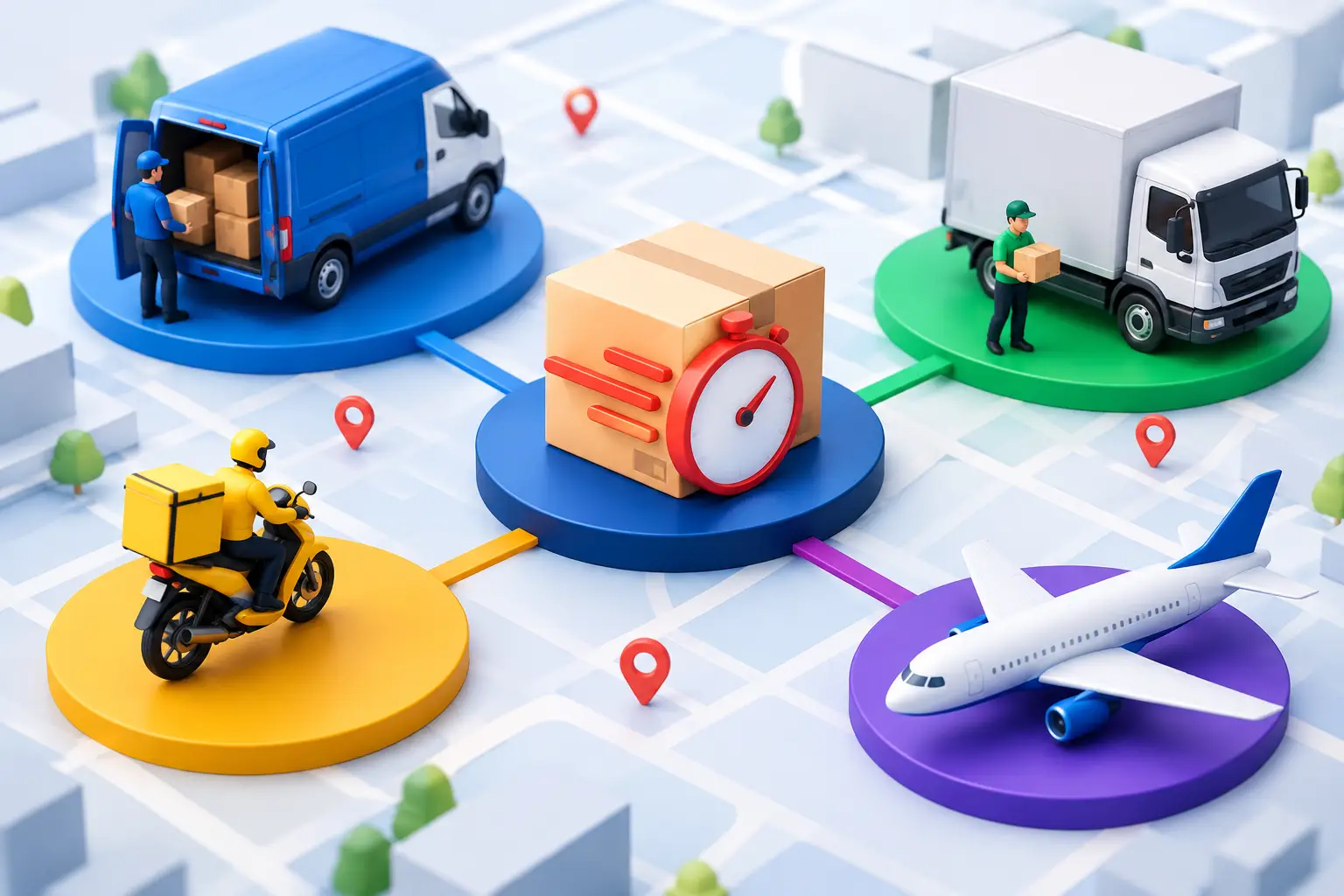
Courier Network Comparison for Urgent Loads

A courier network comparison is not simply about finding the quickest option on paper. It is about choosing a delivery method that suits the item, deadline and level of care required. A replacement automotive part needed this afternoon has different priorities from a pallet of stock planned for next week. The right service depends on what is being moved and what happens if it arrives late.
For businesses and private customers, the most useful comparison starts with the journey itself. Will your item travel directly to its destination? Will it pass through sorting depots? Does it need a dedicated vehicle, or is a scheduled service a better fit? Knowing the answers makes booking simpler and helps you set realistic expectations.
Courier network comparison: start with the journey
Most courier services fall into three broad models: depot-based networks, dedicated direct delivery and scheduled transport. Each has a place. The best choice is the one that matches your consignment rather than a one-size-fits-all approach.
A depot-based network is commonly used for standard parcels and non-urgent consignments. Items are collected, taken to a local depot, sorted with other deliveries and moved onwards through further hubs where needed. This model can suit smaller items with flexible delivery requirements, particularly when the journey is not time-critical.
Dedicated delivery works differently. Your consignment is collected in a vehicle selected for the load and taken directly to its destination. It is not passed between drivers or processed through parcel sorting depots. That reduced handling can be particularly valuable for urgent documents, production equipment, fragile business items, bulky goods or a forgotten laptop that needs to reach a colleague without delay.
Scheduled transport sits between the two. It is useful when you know the delivery requirement in advance, such as regular stock movements, planned construction supplies or recurring collections between sites. The journey can be organised around your operating hours, loading needs and required vehicle size.
When a depot network may be the right fit
A depot network can be a sensible choice when speed is not the main concern and the item is compact, securely packed and straightforward to process. For example, a routine shipment of documents or a small box that can arrive over the next few working days may not need a dedicated vehicle.
The trade-off is that the consignment may be handled at several points during its journey. This is part of how shared parcel networks operate. For standard deliveries, that may be entirely appropriate. However, it is worth considering whether multiple handovers suit the contents, packaging and deadline.
Before choosing this route, check the service level carefully. Ask how delivery dates are presented, whether the item will be tracked, what information is needed on the label and whether there are size or weight limits. A service that works well for a boxed parcel may not be suitable for awkward equipment, several large cartons or an item that must arrive at a precise time.
When direct delivery makes more sense
A dedicated vehicle is often the clearest option when timing, handling or load size matters. Once collected, the vehicle travels from collection to destination specifically for your consignment. This can give you a more direct line of communication and avoids the uncertainty of a multi-stage depot journey.
For a manufacturer, this may mean getting a replacement component to a customer site so work can continue. For an events team, it may mean moving last-minute display materials or equipment to a venue. For a private customer, it could be collecting a sofa, delivering white goods or transporting luggage, keys or important belongings across the country.
Direct delivery is not necessarily the right answer for every item. If the delivery is routine, small and not urgent, a network service may be more proportionate. But where a delay would interrupt work, miss an appointment or create avoidable pressure, direct transport gives you greater control over the route and handling.
DB Couriers provides same-day dedicated delivery from Liverpool and across the UK, with cars and vans chosen to suit the consignment. This means a document does not require the same vehicle as exhibition equipment, furniture or a palletised load. Providing accurate details at the quote stage helps us plan the journey properly.
Compare vehicle suitability, not just delivery speed
A courier network comparison should include the vehicle as well as the route. Choosing a service without considering the size, shape and weight of the load can lead to delays at collection or difficulties at delivery.
A car may suit urgent documents, small packages, keys or a laptop. A small or medium van can be appropriate for boxed stock, spare parts and several cartons. Longer items, larger quantities or bulky goods may need an extra-long-wheelbase or Luton van. For furniture transport, office relocations and small house moves, access at both addresses also matters.
Give clear information when requesting a quote. Include the collection and delivery postcodes, the number of items, dimensions where possible, approximate weight, whether there are stairs, and any loading restrictions. If an item is unusually shaped, fragile or difficult to handle, say so from the outset. This allows the vehicle and collection arrangements to be matched to the job.
Questions worth asking before you book
The most helpful questions are practical ones. They reveal whether the service has been designed around your actual requirement rather than a general delivery category.
Consider the following before confirming a booking:
Does the item need to arrive on the same day, by a particular time or on a planned date?
Will it travel directly, or through one or more sorting locations?
What vehicle is suitable for the dimensions, weight and access at each end?
Who will receive the item, and are there site rules, booking slots or security procedures?
Do you need updates during the journey or confirmation once delivery is complete?
For regular business transport, it is also worth discussing how bookings will be managed. A business courier account can make repeat work easier to arrange and support centralised billing, subject to approval. This can be useful for operations teams that send parts, stock, equipment or documents on a frequent basis.
Timing is about more than mileage
A short journey can still be difficult if there is limited access, a strict delivery slot or a busy collection point. Equally, a longer journey can be straightforward when the collection is ready, the route is clear and the receiving contact is expecting the delivery.
When comparing options, share the real deadline rather than simply asking for the fastest service. For example, a legal document may need to be delivered before a meeting. Construction supplies may need to reach site before a contractor leaves. A replacement part may be needed before a production line can restart. The reason behind the deadline helps the courier plan the most suitable collection and delivery approach.
Clear communication also matters after collection. If the recipient has changed, a site is temporarily inaccessible or the delivery point has specific instructions, passing this information on promptly can prevent wasted time. A good transport plan accounts for these details early, but it should also leave room to respond when circumstances change.
Choosing the right option for your consignment
There is no single winner in every courier network comparison. Shared networks are useful for many standard parcels. Scheduled transport can support planned, recurring movements. Dedicated direct delivery is often the better fit when an item is urgent, valuable to your operation, bulky, awkward to handle or unsuitable for repeated transfers.
The key is to compare the service against the consequence of delay or extra handling. If a routine parcel can wait, a standard network may be appropriate. If a missed deadline affects a customer, a project, a production schedule or an important personal arrangement, a direct vehicle can offer greater reassurance.
When you are ready to move an urgent consignment, bulky item or planned business load, request a free quote with the collection point, destination, item details and required delivery time. We will help you arrange a service that fits the journey.
Comments