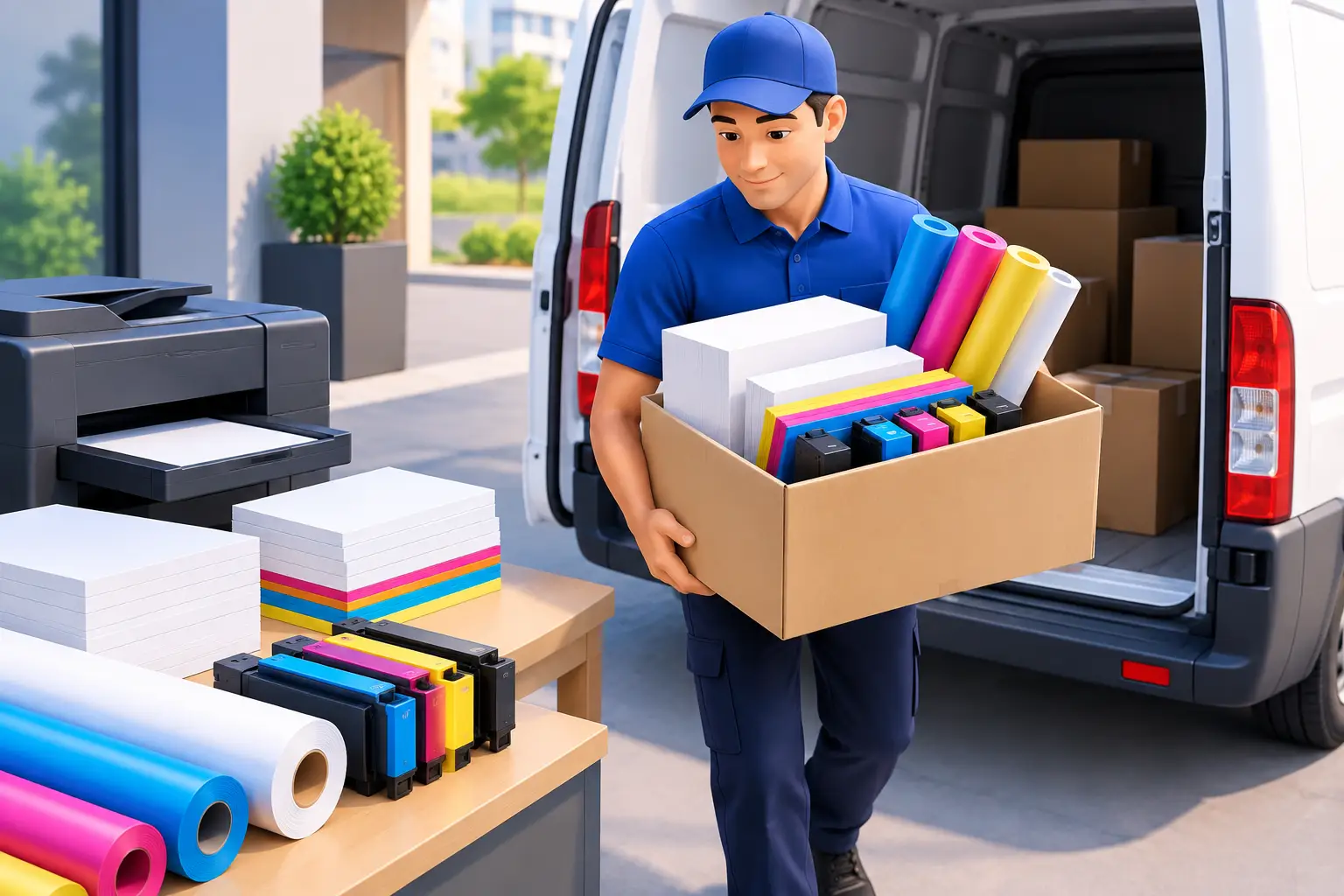
Can Couriers Transport Printing Materials Safely?

A box of printed brochures may look straightforward to move, but a bent corner, a damp pallet or a missed delivery slot can make the whole job unusable. So, can couriers transport printing materials? Yes - provided the vehicle, handling and delivery plan suit the materials you are sending.
From urgent proof copies and business stationery to wide-format graphics, exhibition panels and boxed print stock, printing materials often need more care than a standard parcel service can offer. A dedicated courier can collect your consignment and take it directly to the recipient, reducing the number of times it is handled along the way.
When a dedicated courier is the right choice for printing materials
Printing deadlines are often fixed. A client may be opening a new site, an event team may be setting up the following morning, or a production line may need packaging sleeves before work can continue. If the item is ready but the delivery needs close attention, direct transport gives you more control over the journey.
A dedicated vehicle is particularly useful when you need to send time-sensitive print runs, presentation packs, point-of-sale displays, sample books or confidential documents. Rather than moving through sorting depots and between vehicles, the consignment travels from collection to destination in the same vehicle. That means less loading and unloading, and fewer opportunities for creases, tears or misplaced boxes.
This does not mean every print delivery needs a same-day courier. Small, non-urgent items that are well protected may be suitable for a standard next-day option. The decision depends on the deadline, the value of the materials, their size and how easily they could be replaced. For a last-minute run or delicate finished work, dedicated delivery is usually the more reassuring option.
Can couriers transport printing materials of different types?
Most printing materials can be moved by courier, but they should not all be packed or transported in the same way. Paper products, framed displays, inks and large graphics each have different risks. Sharing clear details before collection helps the courier select a suitable vehicle and plan safe loading.
Printed documents, brochures and stationery
Leaflets, catalogues, manuals and letterheads are normally straightforward to transport when packed in strong cartons. The main concern is preventing the boxes from being crushed or exposed to moisture. If you are sending several boxes, placing them on a pallet or keeping them together as a single consignment can make handling more orderly.
For urgent legal bundles, tender documents or proof copies, direct delivery also helps maintain a clear chain of possession. Tell the courier if a named person must receive the items, or if they need to be delivered to a reception, print room or site office.
Posters, banners and large-format graphics
Large-format materials need more planning. Posters and vinyl graphics may travel in protective tubes, while mounted boards and exhibition graphics need flat, secure positioning. A vehicle that is too small can force materials to bend, while an unsuitable loading arrangement may leave corners exposed.
Before booking, measure the longest and widest item rather than estimating. Include any protective packaging in those measurements. This allows the courier to choose an appropriate vehicle, whether that is a car for document tubes, a van for boxed graphics or a larger vehicle for display materials and equipment travelling together.
Printed boards, signs and exhibition materials
Foamex boards, correx signs, pop-up stands and display panels can be awkward because they are light but bulky. They may also scratch or flex if stacked without protection. Corner guards, flat packaging and clear separation from heavier items will help reduce the risk of damage.
Where an exhibition delivery includes printed materials alongside stands, lighting cases or promotional stock, it is worth giving the full load details. The courier can then allow for the size, weight and shape of each item rather than treating the booking as a few boxes.
Inks, toners and related supplies
Printer inks, cartridges and toners require careful packaging to avoid leaks or crushed containers. Keep them sealed in their original packaging where possible, then place them inside a sturdy outer box with suitable protection around them.
Some printing products may have transport restrictions because of their chemical content or classification. Be clear about exactly what you are sending before booking. A courier can advise whether the consignment is suitable for transport, but you should not assume that every ink, solvent or aerosol product can be carried in the same way.
Packing printing materials for transport
Good transport starts before collection. Even a direct journey cannot protect materials that are loose, poorly supported or packed in boxes that are too weak for their contents.
Use cartons that match the load. An oversized box allows brochures or sample packs to slide around, while an overfilled one can split when lifted. Fill gaps with suitable packing material, seal boxes securely and label them clearly with the delivery details. If a box must remain upright, mark that instruction where it can be seen.
Flat printed work needs rigid support. Place boards, posters or unmounted sheets between protective layers to stop them bending. Tubes should be capped securely, and framed pieces should have their corners protected. Avoid using tape directly on printed surfaces, as it can lift ink or leave marks when removed.
For pallets, make sure the load is stable before collection. Boxes should be stacked squarely, with heavier cartons at the bottom. Stretch wrap can help hold the load together, but it should not be used to hide an unstable stack. If the pallet is taller, wider or heavier than usual, provide those details when requesting a quote.
Give the courier the information that affects the journey
The best courier booking is specific. State what you are sending, how many pieces there are, the dimensions and approximate weight, plus whether any items are fragile, flat-packed or must stay upright. Photographs can be useful for unusually shaped display materials or bulky print runs.
Delivery access matters too. A city-centre print studio, a warehouse loading bay and an exhibition hall have very different collection and drop-off arrangements. Let the courier know about stairs, restricted access, timed venue slots, a named contact or any requirement to call on arrival. This helps avoid delays at the point where the delivery matters most.
If the work is still coming off the press, give a realistic ready time rather than the time you hope it will be finished. A flexible collection arrangement can be planned around your production schedule, but clear communication is essential when deadlines are tight.
Direct delivery helps protect urgent print work
Printing materials are often produced close to the deadline because artwork changes, client approval arrives late or quantities are confirmed at short notice. Once the job is complete, there may be little time to recover from a delivery problem.
Direct delivery reduces unnecessary handling by keeping the consignment in one dedicated vehicle from collection to destination. It is a practical option for print businesses sending completed work, event teams moving branded materials, and businesses that need an urgent replacement batch delivered to a branch, customer or venue.
DB Couriers provides dedicated same-day, next-day and scheduled transport for printing materials across the North West and nationwide. We can discuss the load, select a vehicle that suits it and keep communication clear from collection through to delivery.
Whether you are sending a single proof, several cartons of brochures or a van load of exhibition graphics, the right preparation makes a real difference. Request a free quote with the collection and delivery details, and we will help you arrange transport that treats your printed materials with the care their deadline demands.
Comments