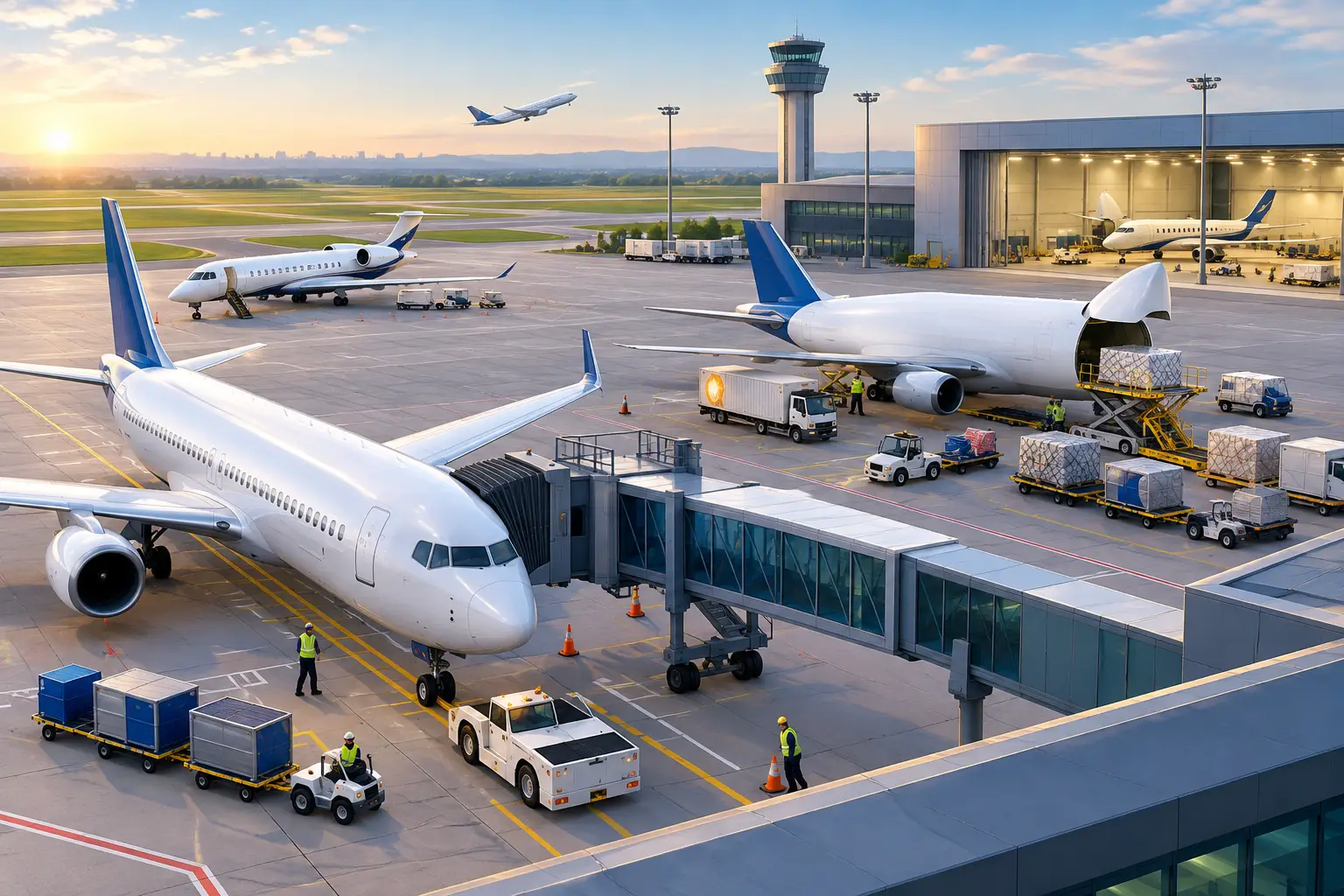
Airside Work with FBOs, Airlines & Cargo Airlines

A consignment can be only a few metres from an aircraft and still require a carefully managed handover. Airside - experience working with FBOs, airlines & cargo airlines - is not simply about reaching an airport quickly. It is about arriving at the correct place, with the right details, at the agreed time, while following the receiving party’s instructions.
For businesses sending aircraft parts, production equipment, documents, catering supplies or urgent stock, the road journey is only one part of the job. Airport access, security procedures and the person authorised to receive the item can all affect how the delivery is planned.
What airside delivery involves
Airside is the controlled area of an airport where aircraft operate. It is separate from public roads, car parks and most terminal buildings. Access is restricted, and the rules can differ between airports, terminals and operators.
In many cases, a courier will deliver to a landside reception point, cargo terminal, handling agent or security gate. The approved airline representative, ground handler or FBO team then takes the item through to the airside area. This is often the most practical arrangement, particularly where the driver does not have the required access credentials.
That distinction matters. A delivery described as “to the aircraft” may actually need to be booked into a cargo acceptance point. A package for a private flight may need to go to the FBO reception rather than a passenger terminal. Getting this wrong can cause avoidable waiting and may mean the consignment cannot be accepted when it arrives.
FBO, airline and cargo airline handovers are different
FBO stands for fixed-base operator. An FBO commonly supports private and business aviation, providing facilities and ground services for aircraft, crew and passengers. Deliveries may include flight documents, crew luggage, replacement items, catering supplies or operational equipment.
FBO teams often work to a changing flight schedule. They need clear information: the aircraft registration where relevant, flight reference, contact name, expected arrival time and a description of the item. A small box without a contact or flight detail can be difficult to match to the correct movement, even when it has reached the right airport.
Commercial airlines may have their own cargo facilities, ground handling arrangements and acceptance rules. A delivery for an airline office is not the same as a shipment entering an airline cargo process. The receiver may need documentation checked, labels applied or the item presented at a specific desk before a cut-off time.
Cargo airlines and cargo terminals are usually more process-led again. They may handle larger consignments, pallets, urgent engineering parts and time-sensitive freight. The load may need to be presented with booking references, shipper and consignee details, dimensions, weight and any required paperwork. A dedicated vehicle can reduce handling on the road journey, but it does not remove the receiving terminal’s own acceptance checks.
Why planning matters before collection
Airport work rewards accurate information. A last-minute part may be urgent, but urgency does not replace the need for a named contact, a confirmed delivery point and clear instructions on who can accept it.
Before booking a dedicated courier, confirm the airport, terminal or FBO name, collection address and receiving point. Ask whether the item should be delivered landside, to a cargo shed, to a handling agent or to a nominated gate. It is also useful to check site opening arrangements, vehicle restrictions and whether advance notification is required.
For an aircraft-related delivery, the following details can prevent delays at the handover:
The airline, FBO, handler or cargo terminal name
A live contact name and telephone number for the receiving team
A flight number, aircraft registration or cargo booking reference where applicable
A clear description of the item, including its size and weight
Any delivery reference, paperwork or labels requested by the receiver
The receiving party’s instructions take priority. Airports can change access arrangements at short notice, and an airline or handler may have its own process for accepting goods. It depends on the airport, the nature of the item and the type of operation being supported.
Choosing the right vehicle for the consignment
The vehicle should suit both the load and the handover point. Urgent documents, a laptop, small components or flight paperwork may travel well in a car or small van. Larger boxes, equipment cases, multiple items or palletised goods may need a medium, extra-long-wheelbase or Luton van.
Selecting the right vehicle is not only about capacity. It helps keep the consignment secure and manageable from collection to destination. A load that is properly accommodated is easier to protect in transit and simpler to present at a cargo terminal or FBO receiving area.
For heavier or awkward items, provide accurate dimensions and weight when requesting a quote. This allows the journey to be planned around a suitable vehicle rather than relying on assumptions. If the consignment has specific handling requirements, discuss them before collection so the delivery plan reflects what the receiving party expects.
Direct transport helps protect time-critical items
Where an item is needed for a scheduled departure, maintenance task or onward cargo movement, unnecessary transfers can add risk. A dedicated vehicle collects your consignment and takes it directly to the agreed destination, rather than sending it through a parcel sorting network.
That direct approach is useful for urgent aircraft parts, event equipment travelling with a production, legal documents or business stock needed at an airport location. It also gives you one clear transport plan: collection, direct journey and agreed handover.
There is still a practical trade-off. Direct road transport can make the journey more straightforward, but it cannot override airport security, cargo acceptance cut-offs or a receiver who is unavailable. The best way to protect the schedule is to confirm the handover process before the vehicle sets off and keep communication open if anything changes.
Clear communication at every stage
Airport deliveries often involve several parties: the sender, the courier, a dispatcher, the recipient, an FBO or handler, and sometimes an airline cargo team. A simple mismatch in information can leave the driver at the wrong entrance or the receiver looking for a package under a different reference.
Provide the same key information to everyone involved. If a contact changes, a flight is delayed or the collection is no longer ready, pass that on promptly. Equally, the courier should be able to contact the receiving party if clarification is needed at the destination.
For repeat movements, keeping a record of usual delivery points, site contacts and preferred vehicle types can make future bookings easier to arrange. This is particularly helpful for engineering firms, production teams and businesses supporting regular airport operations.
Arranging a dedicated airport delivery
DB Couriers can arrange dedicated road transport for airport collections and deliveries across the UK, subject to the receiving location’s access rules and the consignment being suitable for transport. We will use the details you provide to plan the collection, select an appropriate vehicle and deliver directly to the agreed receiving point.
If you are arranging an urgent delivery to an FBO, airline office, handler or cargo terminal, have the collection address, item details and recipient contact ready. Clear instructions at the start give your consignment the best chance of reaching the right person without unnecessary handling. Request a free quote to discuss your airport delivery requirements.
Comments